 Tar Pit Yoga
Yoga for Upper Back Pain: 5 Stretches for Pain Between Shoulder Blades
That burning ache between your shoulder blades after hours of computer work is often caused by fatigued rhomboids, costovertebral rib joint irritation, and tight chest muscles. Here is how targeted thoracic restorative movement eliminates upper back tension.

Rhomboid Principle: Burning upper back muscles are usually overstretched and weak, held in chronic tension by tight, shortened chest muscles pulling forward.
The Root Cause: The 'Overstretched & Locked-Long' Rhomboids
When you hunch over a keyboard or smartphone, your shoulder blades slide forward away from the spine (scapular protraction). In this posture, your rhomboid major, minor, and middle trapezius muscles are stretched taut like rubber bands.
Because they are constantly contracted to prevent you from collapsing forward, their capillaries are compressed, starving the muscle of oxygen (ischemia) and producing trigger points. To cure upper back pain, we must open the anterior chest (pectoralis minor) and restore thoracic rotational mobility.
Chest breathers who inhale by lifting their shoulders overwork the scalenes and upper back. Practice 3 minutes on our Diaphragmatic Breath Pacer to drop your shoulders down.
The 5-Step Restorative Routine
1. Eagle Arms Scapular Stretch (Garudasana Arms)
Primary Function: Spreads the shoulder blades wide to release deep interscapular trigger points

Execution Cue: Cross elbows, wrap forearms, and press palms together. Lift elbows to shoulder height.
Sit upright. Cross your right arm under your left, wrap forearms, and touch palms. Gently lift elbows while pressing forearms away from your face. Breathe deeply into the space between your shoulder blades for 5 breaths, then switch arms.
2. Doorway Pectoralis Minor Expansion
Primary Function: Releases tight chest muscles that pull the shoulder blades into permanent protraction
Execution Cue: Place forearms against a doorframe at 90 degrees and step forward gently.
Stand in an open doorway. Place forearms on the frame at elbow height. Step one foot forward and gently lean your chest through. Hold for 30 seconds while breathing deeply into your collarbones.
3. Restorative Cat-Cow Thoracic Wave
Primary Function: Mobilizes the 12 thoracic vertebrae and costovertebral rib joints
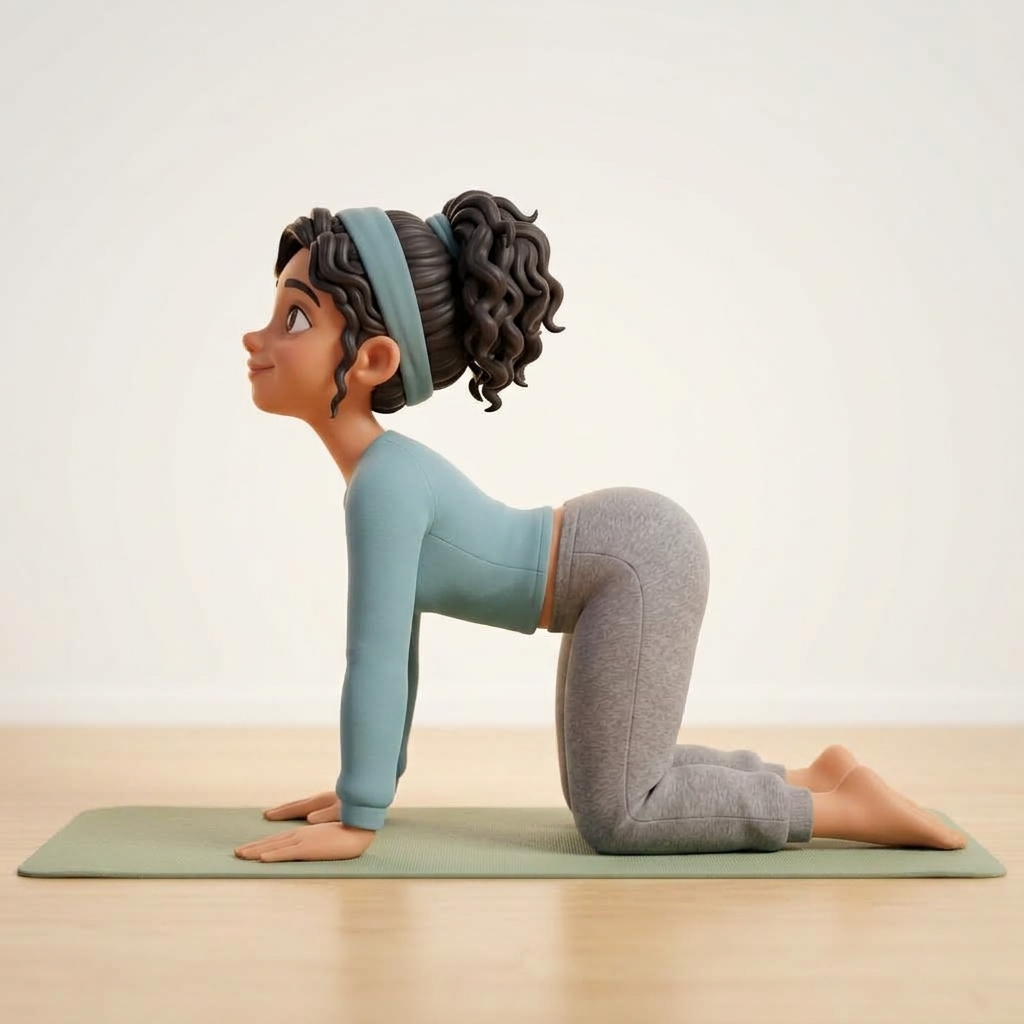
Execution Cue: Focus the movement between your shoulder blades rather than your lower back.
On all fours, exhale to round your upper back toward the ceiling, tucking your chin to stretch the thoracic erectors. Inhale to gently draw shoulder blades together. Repeat 10 slow cycles.
4. Supported Child's Pose with Arm Decompression
Primary Function: Decompresses latissimus dorsi and thoracic facet joints

Execution Cue: Sink hips onto heels and extend arms forward with palms facing upward to relax shoulders.
Kneel with knees wide and sink hips back onto heels. Extend your arms out long, rest your forehead on the mat, and flip palms to face the ceiling to un-rotate your shoulders. Hold for 2 minutes.
5. Restorative Reclining Spinal Twist
Primary Function: Releases rotational tension at the thoracolumbar junction
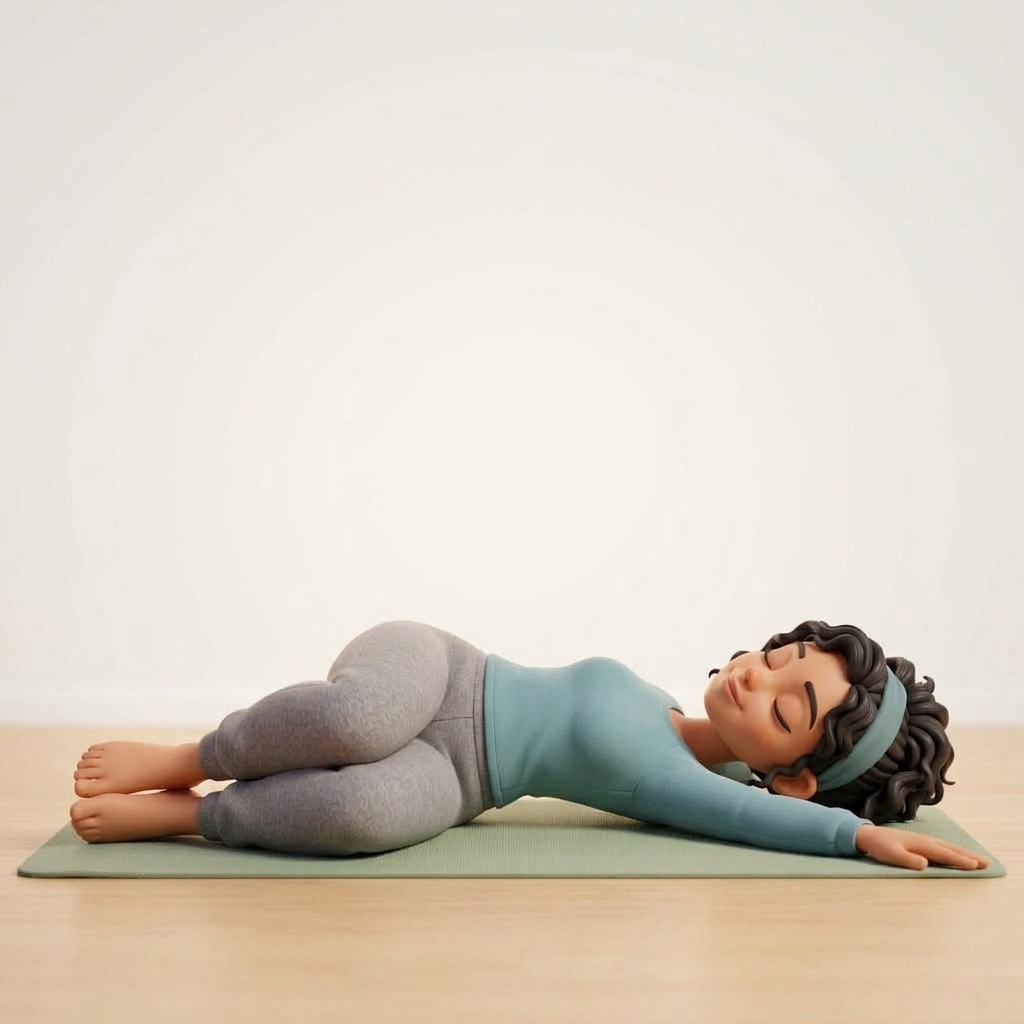
Execution Cue: Pin both shoulder blades flat to the floor while knees rest on a pillow.
Lie supine, bend knees, and let them drop softly to one side while extending opposite arm in a wide T-shape. Turn your gaze toward the outstretched arm. Hold for 2 minutes per side.
Daily mobility cannot fully overcome 8 hours of sitting at an uncalibrated desk or poor screen height.
→ Optimize Your Station: Use our Interactive Desk Calculator or test your alignment on our 60-Second Posture Test.
Frequently Asked Questions
Why does the pain between my shoulder blades feel like a hot burning knife?
Burning pain in the upper back is typically caused by active myofascial trigger points in the rhomboid and levator scapulae muscles, where chronic muscular contracture has restricted micro-vascular blood flow.
Can tight upper back muscles cause breathing difficulty?
Yes. Each thoracic vertebra articulates with a rib via the costovertebral joints. Stiff thoracic segments restrict rib cage expansion, forcing shallow breathing.
How does desk monitor height affect upper back pain?
If your monitor is placed too low, your head tilts forward, dragging the upper back into severe kyphosis. Calibrate your display height with our Desk Calculator.