 Tar Pit Yoga
Yoga for Sciatica Relief: 4 Gentle Stretches for Nerve & Piriformis Decompression
Sciatic nerve pain — whether a sharp jolt down the leg, a deep glute ache, or tingling in the foot — requires a fundamentally different movement strategy. Here is how gentle somatic yoga calms the inflamed nerve root without triggering painful traction.
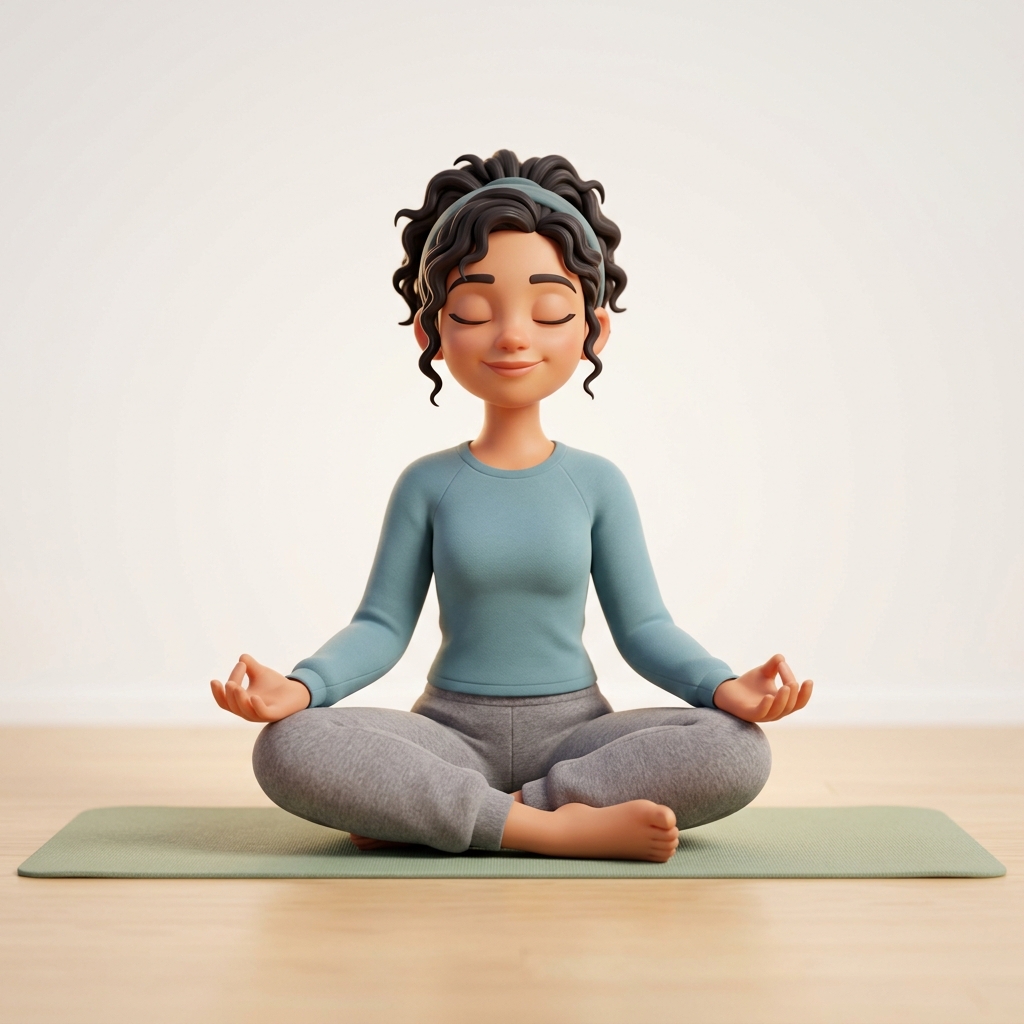
Core Sciatica Rule: "Floss" the nerve gently, never yank it. If you feel electric tingling, back off 20%.
The Big Mistake: Aggressive Hamstring Stretching Worsens Sciatica
When people feel pain radiating down the back of their thigh, their immediate reaction is to do standing forward bends or aggressive hamstring stretches.
Why this backfires: The sciatic nerve runs directly through the posterior leg. An inflamed nerve cannot stretch like a muscle; pulling hard on it causes traction neuropathy, inflaming the nerve sheath further and causing rebound spasms.
In Tar Pit Yoga, we replace aggressive stretching with nerve glides (flossing) and gentle piriformis decompression.
Centralization: When pain retreats from the foot or calf back up toward the glute, your nerve is recovering. Even if the glute ache feels slightly sharper, retreat from the extremity is clinical proof of healing!
1. Reclining Knee-to-Chest (Apanasana)
Primary Benefit: Relieves piriformis impingement on the sciatic nerve • Hold Time: 10 deep breaths per side

Alignment Tip: Gently angle the knee toward the opposite shoulder for deeper piriformis release.
How to execute:
- Lie flat on your back on your mat. Keep your head and neck fully relaxed.
- Bend your affected knee and hug it toward your chest, clasping your hands around the shin.
- Gently draw the knee slightly across your midline toward your opposite shoulder until you feel a gentle, dull stretch deep in the glute.
- Breathe deeply into your pelvic floor for 10 slow breath cycles.
2. Restorative Reclining Spinal Twist (Supta Matsyendrasana)
Primary Benefit: Opens the lumbosacral junction and decompress SI joint friction • Hold Time: 1 to 2 minutes
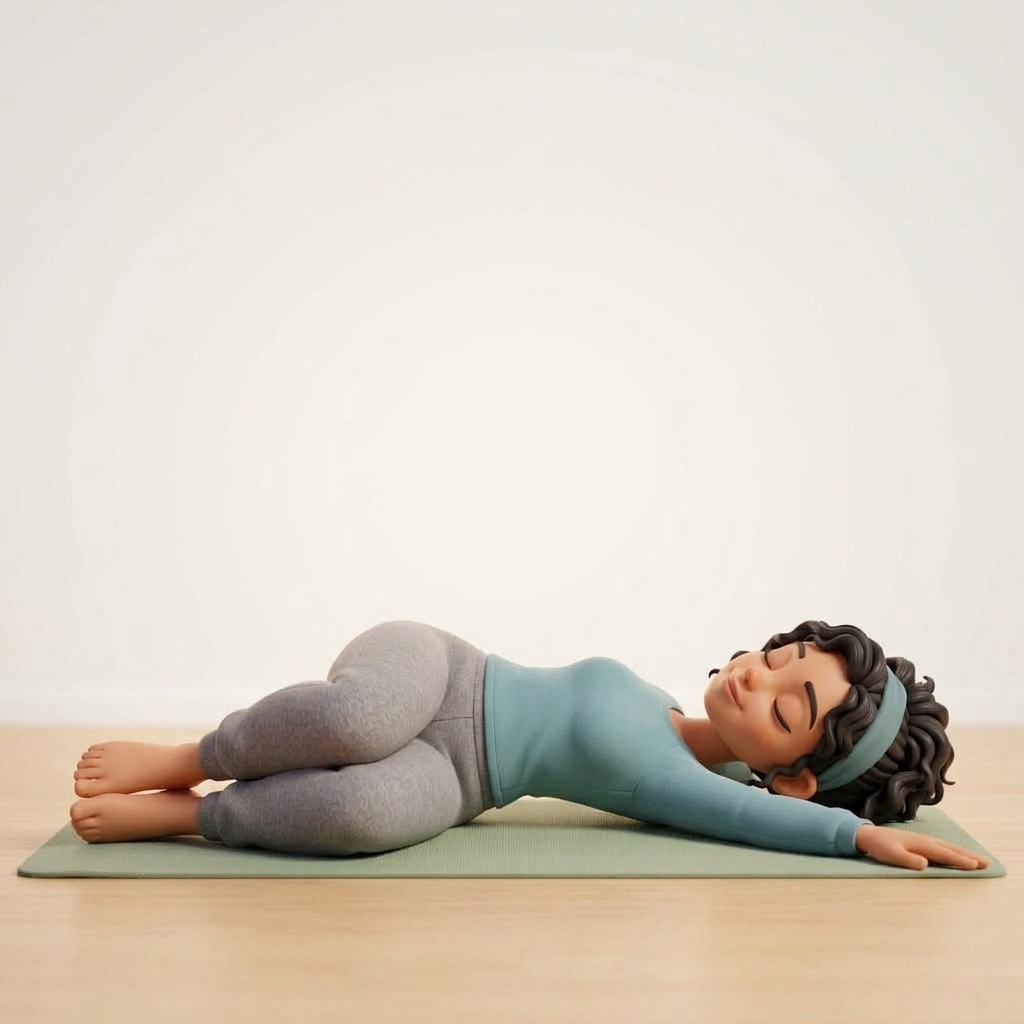
Alignment Tip: Support knees with a pillow if they don't reach the floor comfortably.
How to execute:
- Lie supine with arms stretched out in a comfortable T-shape, palms facing the ceiling.
- Bend both knees with feet flat, gently lift your hips and shift them one inch to the right.
- Let both knees gently drop to the left side of your body. Place a pillow beneath your knees if there is any sharp tension.
- Close your eyes and exhale fully, letting gravity rotate your lower spine without active muscle effort.
3. Supported Wide-Knee Child's Pose (Balasana)
Primary Benefit: Eliminates axial disc compression • Hold Time: 2 minutes
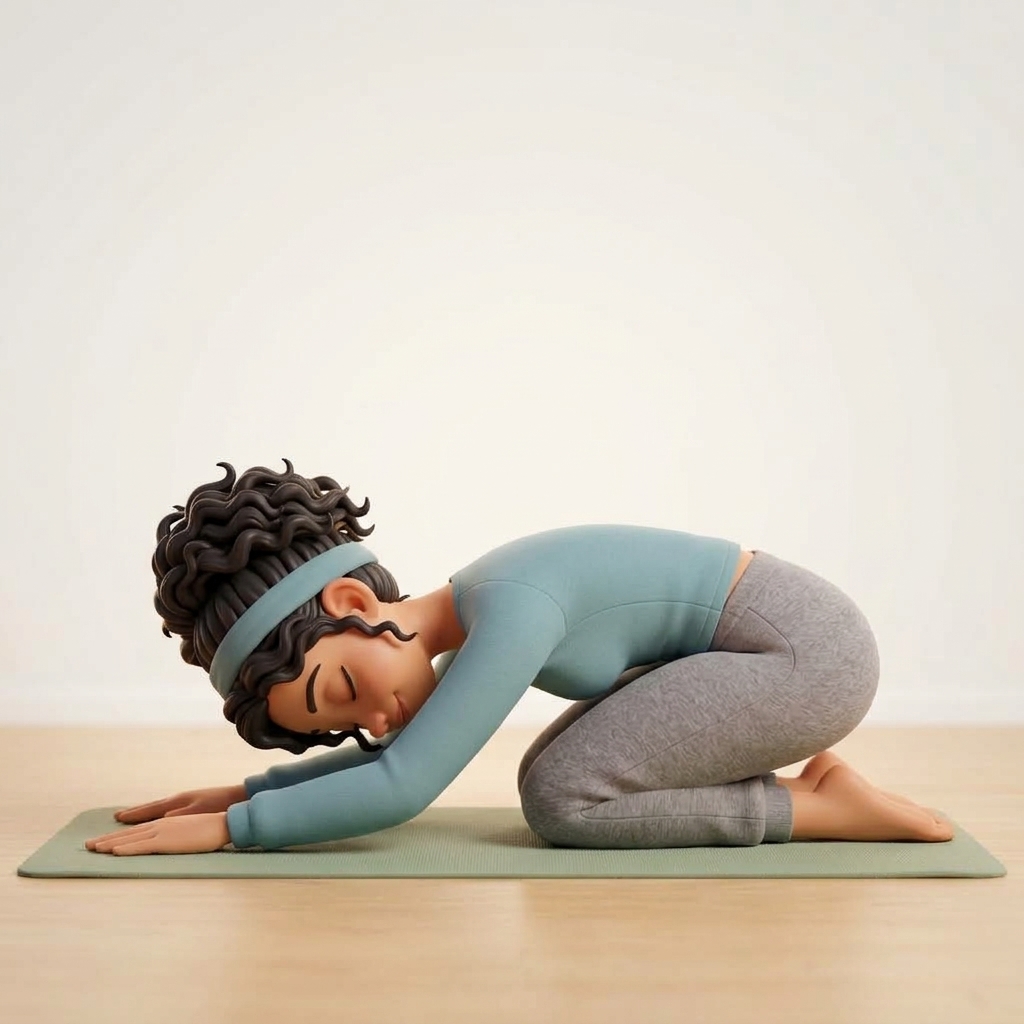
Alignment Tip: Widen your knees to create space for your belly and relax lower back musculature.
How to execute:
- From all fours, touch your big toes together and open your knees out to the edges of your mat.
- Slowly sink your glutes back toward your heels. Walk your hands forward on the floor.
- Rest your forehead gently on the mat. Breathe into the back of your waist, feeling the lower lumbar vertebrae widen on every inhale.
4. Legs-Up-The-Wall Passive Decompression (Viparita Karani)
Primary Benefit: Relieves venous pressure & calms the sciatic nerve pathway • Hold Time: 5 minutes

Alignment Tip: Keep a slight micro-bend in your knees if hamstrings feel tight.
How to execute:
- Sit close to a wall, swivel your hips, and swing your legs vertically up the wall while resting your back and head on the floor.
- Place a thin pillow under your sacrum for elevated lumbar comfort.
- Let your arms rest outward at 45 degrees, close your eyes, and allow the weight of the legs to settle effortlessly.
- Stay for 5 restful minutes to down-regulate the nervous system and reduce nerve hypersensitivity.
Can yoga cure sciatica?
Yes. Most cases of sciatica are caused by piriformis muscle spasms and postural compression rather than permanent nerve damage. By releasing muscular guarding and restoring capillary oxygen flow (as outlined in TMS mind-body research), symptoms typically resolve completely within weeks.
What yoga poses should I avoid with sciatica?
Avoid deep standing forward bends with locked knees, aggressive seated forward folds (Paschimottanasana), and rapid twisting. Always maintain soft micro-bends in the knees.
← Review 5 Best Poses for Back Pain Desk Ergonomics & RSI Guide →