 Tar Pit Yoga
Carpal Tunnel Stretches & Median Nerve Glides: 5 Desk Relief Exercises
Typing with bent wrists and resting forearms on hard desk edges quadruples pressure inside the carpal tunnel, choking blood flow to the median nerve. Here is how gentle neurodynamic nerve flossing restores nerve mobility and eliminates computer tingling.

Core Nerve Rule: Never aggressively yank a nerve. "Floss" it smoothly: as your wrist extends, tilt your head toward the same shoulder to relieve tension.
The Biomechanics of Carpal Tunnel Compression
The carpal tunnel is an unyielding tunnel formed by the carpal bones of the wrist and the fibrous transverse carpal ligament. Packed inside this narrow space are 9 flexor tendons and the Median Nerve, which supplies sensation to your thumb, index, middle, and half of your ring finger:
- Neutral Wrist Position: 2 to 5 mmHg — Normal healthy fluid pressure.
- Wrists Bent Backward (Typing on high desk): 30 to 60 mmHg! — Exceeds capillary blood pressure!
- Resting Wrists on Gel Pads / Hard Edge: Compresses the nerve directly against the transverse ligament, causing ischemic numbness and burning thumb pain.
When pressure inside the tunnel exceeds capillary perfusion pressure, the median nerve suffers ischemic hypoxia (micro-vascular suffocation). As detailed in our viral Hacker News guide (How to Relieve RSI & Computer Strain), resting in rigid braces locks the nerve in stagnation. Nerves must glide to heal.
Understanding "Double Crush Syndrome"
Why do so many programmers and writers fail to find relief even after wrist surgery or cortisone shots? The answer is Double Crush Syndrome:
The median nerve originates from the cervical nerve roots (C6-T1) in your neck, passes beneath the collarbone and pectoralis minor in the chest (thoracic outlet), and travels down the arm into the carpal tunnel. If you have Tech Neck or Forward Head Posture, the nerve is already compressed at the neck and chest. A second mild compression at the wrist then triggers severe carpal tunnel symptoms!
To cure carpal tunnel permanently, you must address both the neck and the wrist.
The 5-Step Restorative Nerve Flossing Routine
1. The Desk Median Nerve Slider (Butler & Shacklock Neurodynamic Glide)
Primary Function: Glides the median nerve through the carpal canal without placing excessive tensile strain on the nerve sheath.
Execution Cue: Synchronize your head and hand: as the wrist extends backward, tilt your head toward the same shoulder to prevent nerve over-stretching.
- Sit tall with shoulders relaxed. Extend your affected arm out to the side at shoulder height, palm facing up toward the ceiling.
- Gently extend your wrist and fingers backward toward the floor.
- The Glide: Simultaneously tilt your head toward the outstretched arm. This pulls the nerve into the hand while releasing tension at the neck.
- Now, release the wrist back to neutral while tilting your head away toward the opposite shoulder.
- Repeat this gentle sliding motion 8 to 10 times in a fluid, pain-free rhythm. Never hold an electric tingling stretch!
2. Modified Prayer Stretch for Flexor Tendons
Primary Function: Lengthens the flexor digitorum superficialis and flexor carpi radialis tendons running inside the carpal tunnel.

Execution Cue: Keep the bases of your palms firmly glued together. Only lower your wrists as far as comfortable without finger numbness.
- Place your palms together in a prayer position in front of your sternum, with fingertips pointing straight up.
- Slowly lower your wrists downward toward your waist while keeping your palms pressed together.
- Hold when you feel a mild, comfortable stretch across the insides of your forearms and palms.
- Hold for 5 deep diaphragmatic breaths (about 20 seconds). Release and gently shake out your fingers.
3. Forearm Extensor & Radial Nerve Release ("Mouse Hand" Reset)
Primary Function: Relaxes the overactive extensor digitorum and supinator muscles that stay contracted from holding a computer mouse.
Execution Cue: Curl your fingers into a soft, loose fist before bending the wrist down.
- Extend your arm straight ahead at shoulder level, elbow locked softly straight.
- Make a loose fist and curl your wrist downward so your knuckles point toward the floor.
- Use your other hand to apply gentle pressure to the back of your curled hand, rotating it slightly outward toward the pinky side.
- Hold for 15 to 20 seconds, feeling the deep tension release across the top of your forearm. Repeat on both sides.
4. Doorway Thoracic Outlet Decompression
Primary Function: Decompresses the brachial plexus at the clavicle and pec minor, halting Double Crush Syndrome.
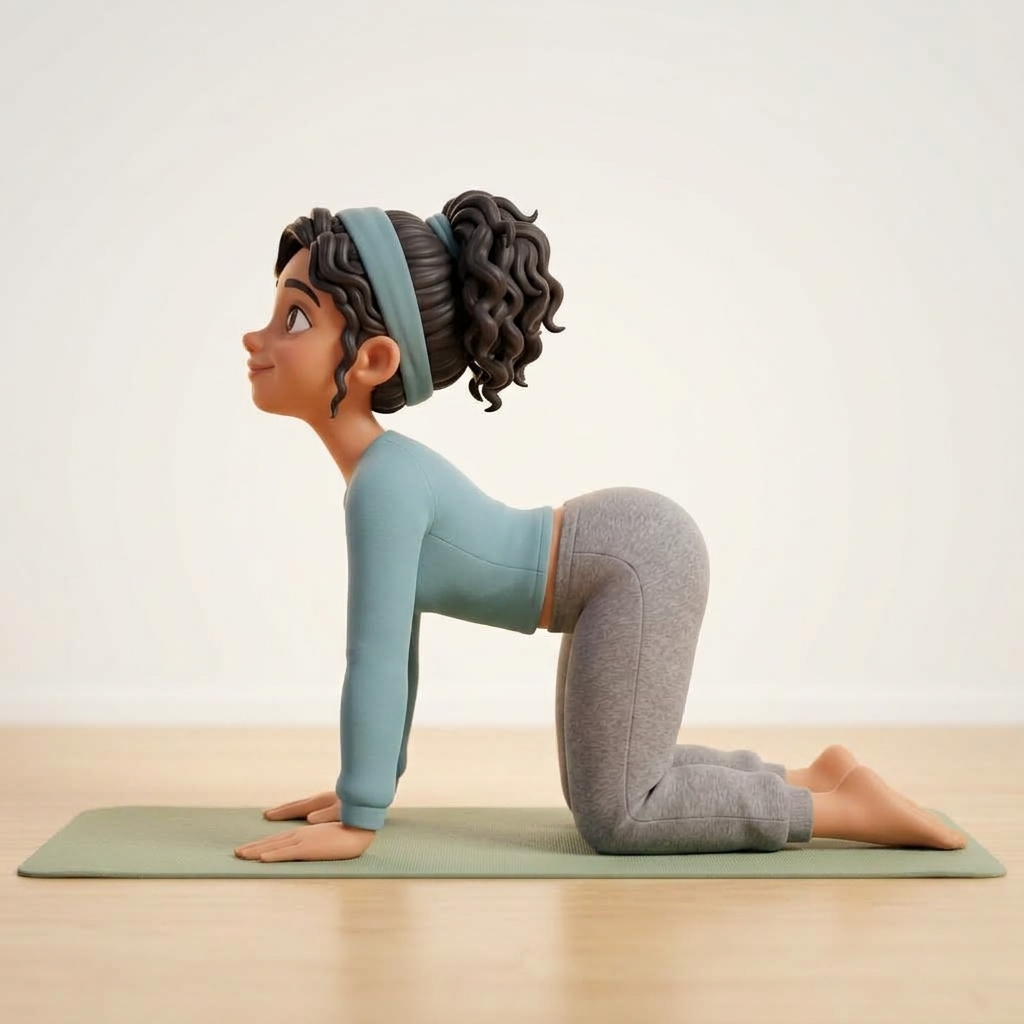
Execution Cue: Drop your shoulders down away from your ears. Never shrug during chest opening.
- Stand inside an open doorway. Place your forearms against the frame with elbows bent at 90 degrees.
- Step one foot forward and gently lean your torso through the doorway.
- Keep your neck relaxed and head aligned over your shoulders (see our Tech Neck Guide).
- Take 5 deep breaths, allowing blood flow to surge down your arms into your fingertips.
5. Supported Child's Pose with Supine Wrists (Palms Up)
Primary Function: Completely removes axial desk load while restoring neutral circulation to the palmar fascia.
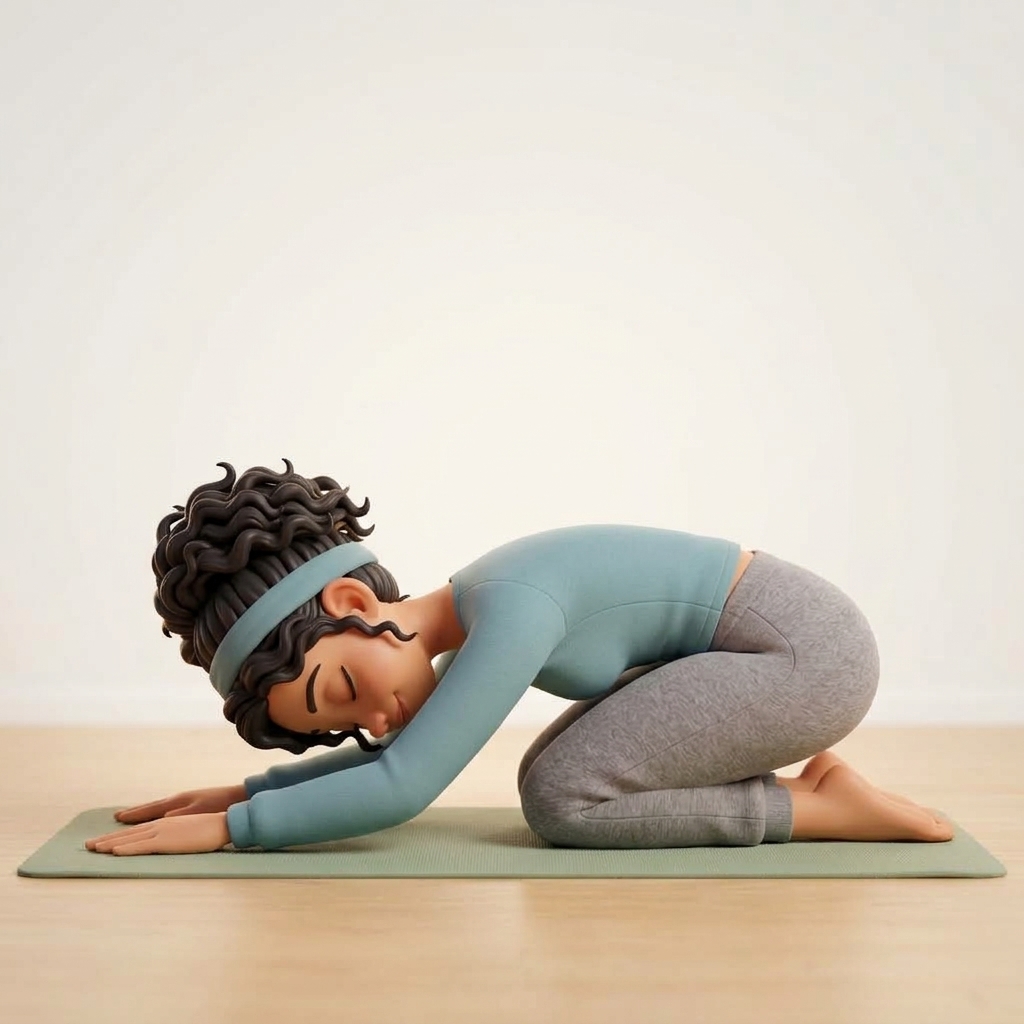
Execution Cue: Flip your palms to face the ceiling. This completely unloads the pronator teres muscle in the forearm.
- Kneel on your mat with knees wide and big toes touching. Sink your hips back to your heels.
- Extend your arms out long in front of you and rest your forehead on the floor.
- The Secret: Rotate your hands so your palms face completely upward toward the ceiling.
- Breathe deeply into your upper back for 2 to 3 restful minutes. Feel your forearms and wrists decompress effortlessly under gravity.
If your desk surface sits above resting elbow height, your wrists must bend backward into 25°–35° of extension all day, spiking carpal tunnel pressure.
→ Calibrate Your Desk Height: Use our free Interactive Ergonomic Desk & Chair Height Calculator to find your neutral elbow-to-keyboard height.
Frequently Asked Questions About Carpal Tunnel
How often should I do median nerve glides?
Perform 1 set of 8 to 10 smooth median nerve sliders twice a day (mid-morning and mid-afternoon). Unlike muscle stretches which can be held for minutes, nerve flossing should always be dynamic and gentle.
Why do my wrists tingle worse at night?
Most people unconsciously curl their wrists into extreme flexion (fetal curl) while sleeping, spiking carpal tunnel pressure. Sleeping with loose neutral wrist splints or practicing our Bedtime Yoga Sequence before bed prevents nocturnal entrapment.
Should I stop typing completely if I have carpal tunnel?
No. Complete immobilization breeds fear and nerve stagnation. As taught in our foundational RSI Ergonomic Protocol, continue typing with relaxed floating wrists, take micro-breaks every 20 minutes, and practice diaphragmatic breathing on our Breath Pacer.
← Read Historic RSI & Typing Protocol Fix Neck & Upper Crossed Syndrome →