 Tar Pit Yoga
Yoga for Scoliosis Relief: Asymmetric Restorative Poses & Spinal Alignment
Living with adolescent or adult degenerative scoliosis means standard symmetrical yoga poses can inadvertently strengthen the wrong side of your curve. Here is how evidence-based asymmetric restorative yoga lengthens the concave curve, strengthens the convex side, and relieves chronic back spasms.
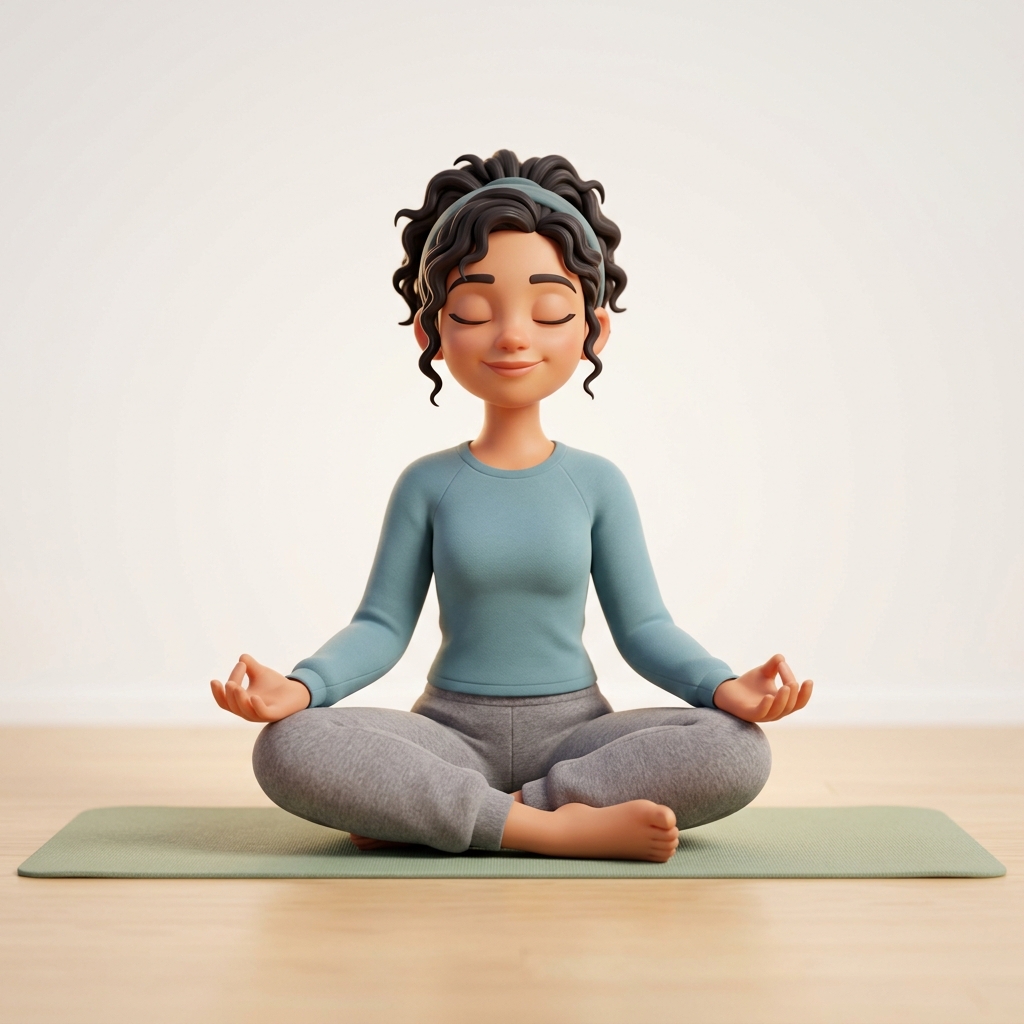
Scoliosis Principle: A curve is asymmetric; your yoga must be asymmetric. Strengthening the convex side pulls the spine back toward midline alignment.
The Science: Dr. Loren Fishman's Peer-Reviewed Side Plank Protocol
In a breakthrough clinical study published in Global Advances in Health and Medicine, Columbia University physiatrist Dr. Loren Fishman, MD, demonstrated that performing an asymmetric side plank on the **convex side of the primary curve** reduced Cobb angles by an average of 32% across patients within months.
By strengthening the convex lateral paraspinal muscles while gently tractioning the collapsed concave side, the spine is muscularly guided back toward functional symmetry. Combined with Tar Pit Yoga's neuroplastic pain approach, this eliminates asymmetric muscle spasms.
Check your doctor's X-ray report to determine whether your primary curve is thoracic (mid-back) or lumbar (lower back), and whether it curves right (dextroscoliosis) or left (levoscoliosis).
The 5-Step Restorative Routine
1. Supported Side Plank on the Convex Side (Dr. Fishman Protocol)
Primary Function: Strengthens weakened lateral convex muscles to pull the curve toward center

Execution Cue: Perform on your forearm with knees bent on the floor for safety. Hold on the CONVEX side only.
Lie on your side with the convex bulge of your curve facing down toward the floor. Rest on your forearm with knees bent at 90 degrees. Lift your hips so your torso forms a straight line. Hold for 30 to 60 seconds once daily.
2. Asymmetric Supported Child's Pose (Side Reach)
Primary Function: Passively opens the compressed concave side of the spinal curve
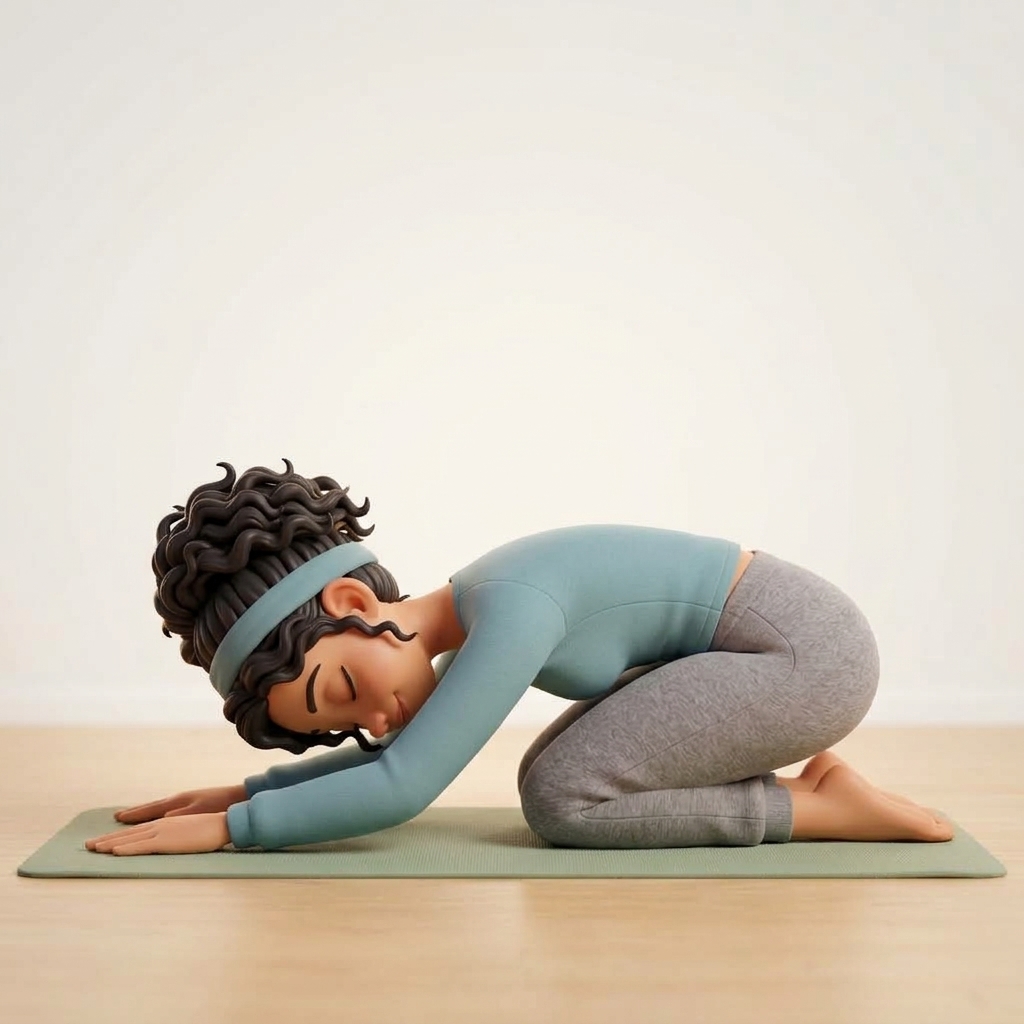
Execution Cue: Walk both hands diagonally toward the convex side to stretch the collapsed concave ribs.
From child's pose with knees wide, walk both hands 45 degrees toward the side of your spinal convexity. Breathe deeply into the tight, compressed opposite flank. Hold for 10 deep breaths.
3. Reclining Single-Leg Pelvic Balancing Stretch
Primary Function: Evens out pelvic obliquity and uneven hip heights

Execution Cue: Gently draw one knee toward the chest while keeping the pelvis level on the mat.
Lie flat on your back. Hug the knee on your lower hip side toward your armpit, allowing the sacrum to settle evenly against the floor. Hold for 1 minute while practicing diaphragmatic breathing.
4. Legs-Up-The-Wall Symmetrical Spinal Traction
Primary Function: Eliminates gravitational lateral shearing on scoliotic vertebrae

Execution Cue: Rest legs vertically on the wall to let gravity traction the spine evenly.
Elevate your legs vertically up a wall while lying flat on your back. Place a folded blanket under the concave lower back if needed to restore spinal symmetry. Rest for 5 to 7 restful minutes.
5. Restorative Reclining Twist with Concave Support
Primary Function: Safely derotates the vertebral bodies without forcing end-range twisting
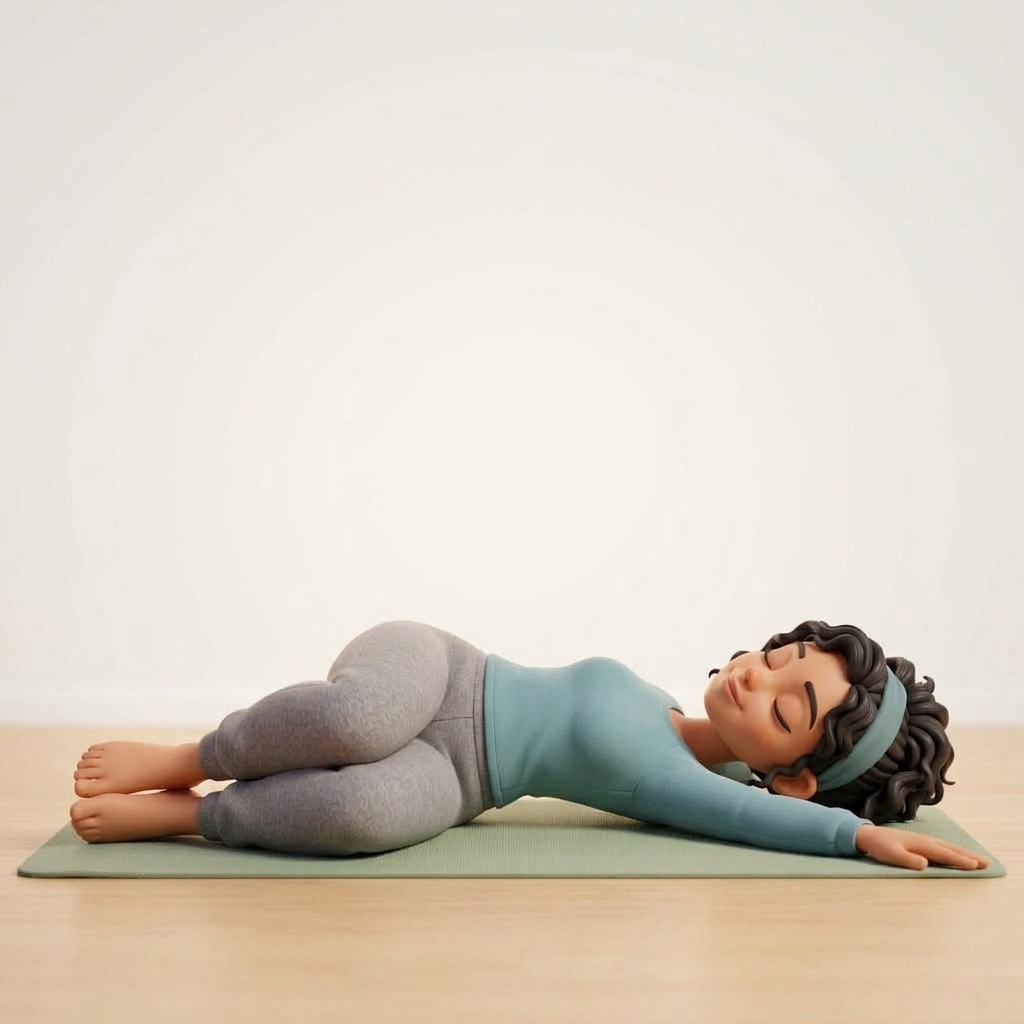
Execution Cue: Support knees with pillows so the spine never drops into an unsupported twist.
Lie supine and gently drop knees to the side that feels open and non-pinching. Support knees on cushions so your shoulders remain flat. Breathe softly into your ribcage for 2 minutes.
Daily mobility cannot fully overcome 8 hours of sitting at an uncalibrated desk or poor screen height.
→ Optimize Your Station: Use our Interactive Desk Calculator or test your alignment on our 60-Second Posture Test.
Frequently Asked Questions
Can yoga really reduce a scoliosis curve Cobb angle?
Yes. Peer-reviewed research by Dr. Loren Fishman published in peer-reviewed medical journals demonstrated an average 32% reduction in Cobb angle in patients practicing asymmetric side planks consistently.
Should I avoid bilateral symmetrical yoga poses?
Poses like bilateral backbends (wheel pose) or intense bilateral forward folds should be modified, as the body will automatically take the path of least resistance and bend further into the existing curve.
How can I relieve muscular spasms caused by scoliosis?
Scoliosis spasms occur because paraspinal muscles on the concave side are cramped while convex muscles are overstretched. Restorative asymmetric stretching combined with our Breath Pacer resets chronic guarding.
← Explore Restorative Poses for Back Pain Back to Homepage →