 Tar Pit Yoga
Yoga for SI Joint Pain: Stabilizing Poses for Sacroiliac Joint Dysfunction
Sacroiliac (SI) joint pain is frequently misdiagnosed as lower back pain or sciatica. Unlike stiff lumbar spines that need flexibility, an unstable or inflamed SI joint requires symmetrical stabilization and gentle muscular co-contraction rather than aggressive twisting.

SI Joint Rule: The SI joint needs stability, not extreme flexibility. Avoid asymmetric deep lunges and aggressive twists that shear the pelvic ligaments.
The Biomechanics: Understanding SI Joint Shearing Forces
The sacroiliac joints connect your sacrum (tailbone) to your ilium (pelvic bones). Secured by some of the strongest ligaments in the human body, the SI joint allows only 2 to 4 millimeters of movement in all directions (nutation and counternutation).
When one side of the pelvis rotates forward while the other rotates back (often from crossing legs, standing with weight on one foot, or aggressive asymmetrical yoga poses), the SI ligaments are stretched and inflamed. Tar Pit Yoga focuses on symmetrical poses with adductor block squeezes to reset pelvic symmetry.
Avoid deep single-leg lunges, warrior I, pigeon pose, and rapid spinal twists. These asymmetric postures torque the pelvis and pull the SI joint out of alignment.
The 5-Step Restorative Routine
1. Symmetrical Bridge Pose with Block Squeeze
Primary Function: Co-contracts glutes and inner adductors to reset the sacrum between pelvic bones
Execution Cue: Place a yoga block between your knees and squeeze gently as you lift into bridge.
Lie supine with knees bent and feet flat on the floor, hip-width apart. Place a yoga block between your inner thighs. Gently squeeze the block while driving through your heels to lift your hips into a low bridge. Hold for 5 breaths, repeat 5 times.
2. Reclining Single Knee-to-Chest Stabilization
Primary Function: Releases piriformis tension without asymmetrical pelvic torquing

Execution Cue: Hug one knee toward your chest while keeping the opposite foot flat on the mat.
Lie flat on your back with knees bent. Hug one knee toward your chest with both hands while keeping the opposite foot firmly planted flat on the floor to stabilize your pelvis. Hold for 30 seconds per side.
3. Supported Butterfly with Outer Thigh Block Blocks
Primary Function: Opens inner groins safely without allowing the SI joint to over-stretch
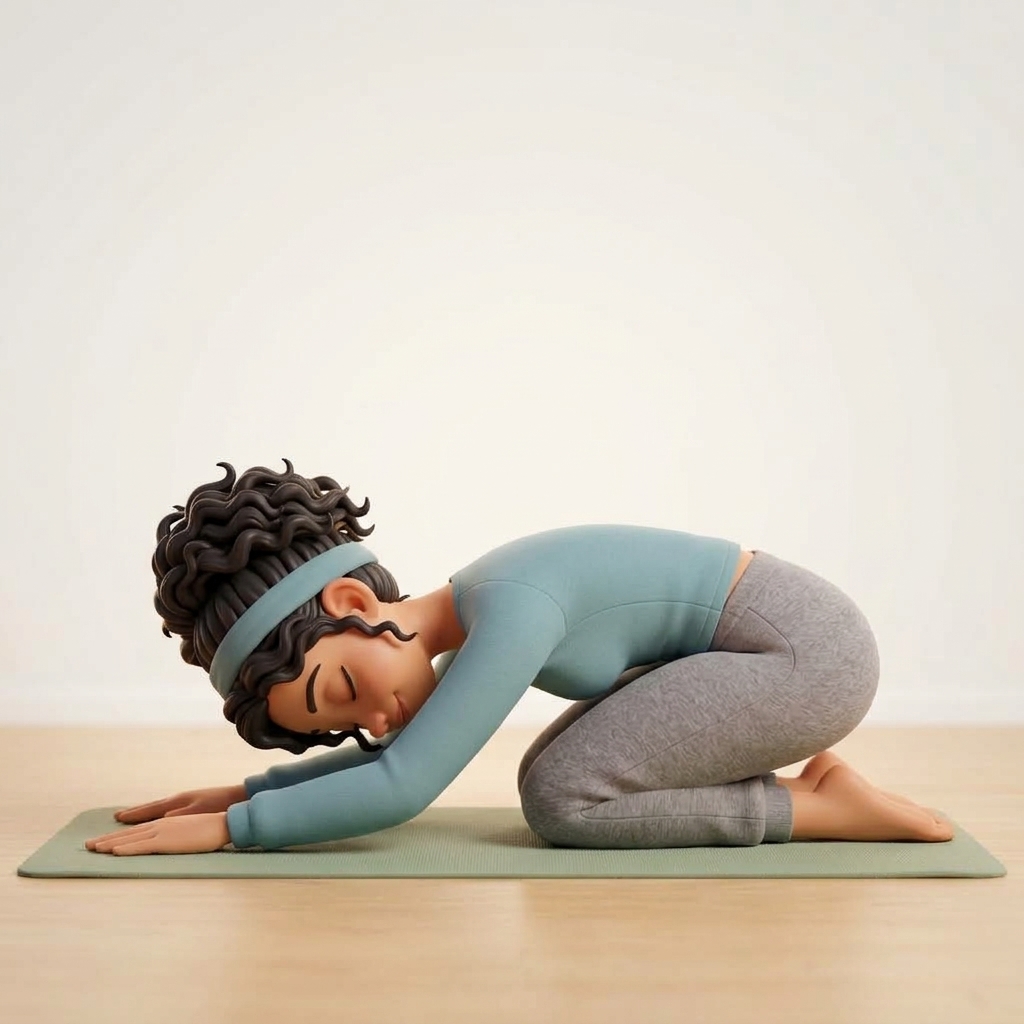
Execution Cue: Support both outer knees with blocks or pillows so the joints rest securely.
Lie on your back and bring the soles of your feet together. Crucially, place pillows or blocks directly under your outer knees so your legs cannot drop to end-range gravity. Breathe softly for 2 minutes.
4. Gentle Symmetrical Cat-Cow (No Pelvic Swaying)
Primary Function: Gently mobilizes the lumbopelvic rhythm with even weight distribution
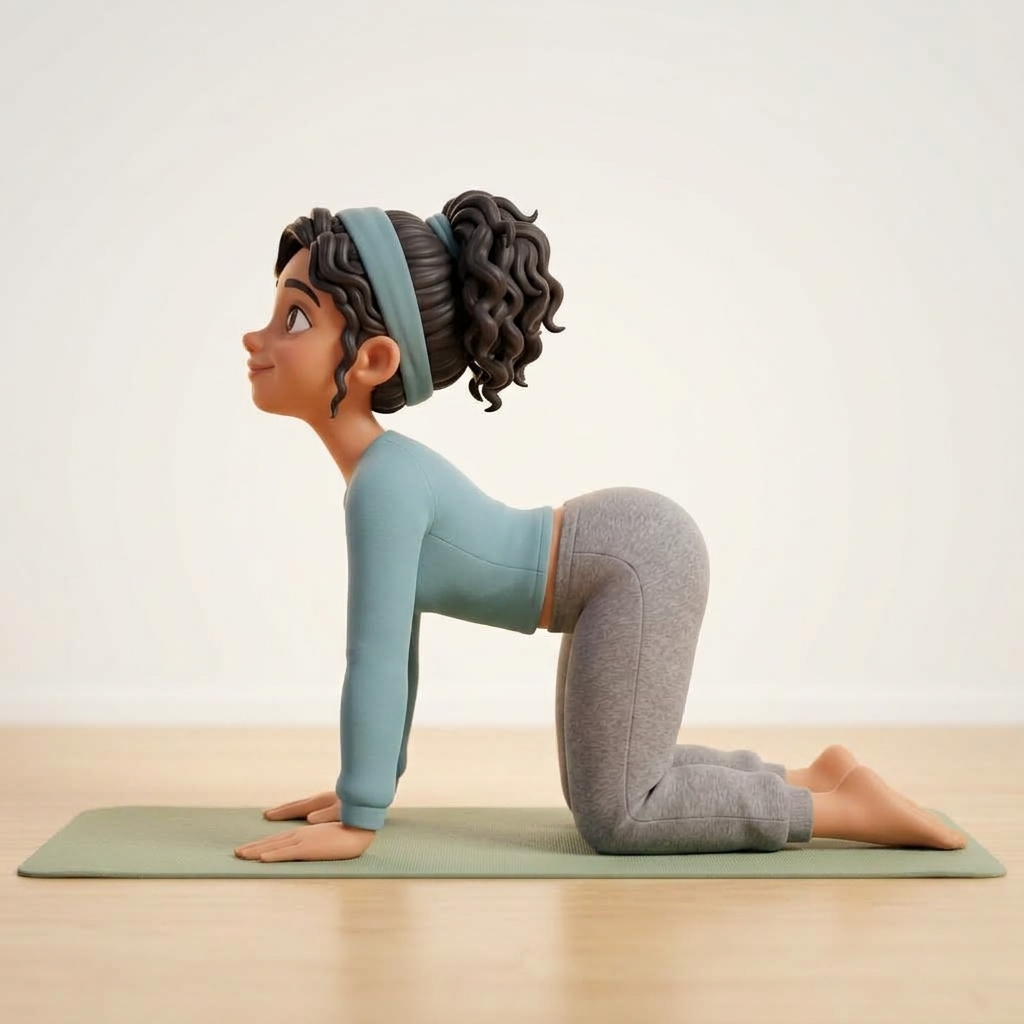
Execution Cue: Ensure weight is distributed 50/50 between both knees and hands.
From hands and knees, ensure your weight is evenly balanced. On an inhale, let your belly soften gently toward the floor; on an exhale, round your back evenly. Avoid swaying your hips side-to-side. Repeat 8 cycles.
5. Legs-Up-The-Wall with Pelvic Belt Support
Primary Function: Completely unloads the sacroiliac ligaments under zero gravitational force

Execution Cue: Wrap a yoga strap around your mid-thighs to keep your legs effortlessly together.
Rest your legs vertically up a wall while lying supine. Place a gentle yoga strap around your thighs so your legs do not splay outward. Close your eyes and breathe deeply into your sacrum for 5 minutes.
Daily mobility cannot fully overcome 8 hours of sitting at an uncalibrated desk or poor screen height.
→ Optimize Your Station: Use our Interactive Desk Calculator or test your alignment on our 60-Second Posture Test.
Frequently Asked Questions
How can I tell if my pain is SI joint or lumbar disc?
SI joint pain is typically localized just below the belt line to one side (the Fortin point) and aches when putting weight on one leg, rolling over in bed, or getting out of a car. Disc pain is usually centralized or radiates down the leg.
Can sitting with crossed legs cause SI joint pain?
Yes! Habitually crossing one leg over the other rotates that pelvic hemipelvis backward, chronically stretching the posterior sacroiliac ligaments.
Is walking good for SI joint pain?
Gentle, symmetrical walking with short strides helps pump fluid through the joint. Avoid power-walking or running until pelvic stability is restored.