 Tar Pit Yoga
Yoga for Plantar Fasciitis: 5 Stretches for Foot Arch & Calf Tightness
That sharp, stabbing pain in your heel with your first morning steps is rarely just a foot problem. Your plantar fascia is the bottom terminus of a continuous fascial highway running from your toes all the way up your calves, hamstrings, and back to your forehead. Here is how whole-body restorative yoga heals plantar fasciitis.
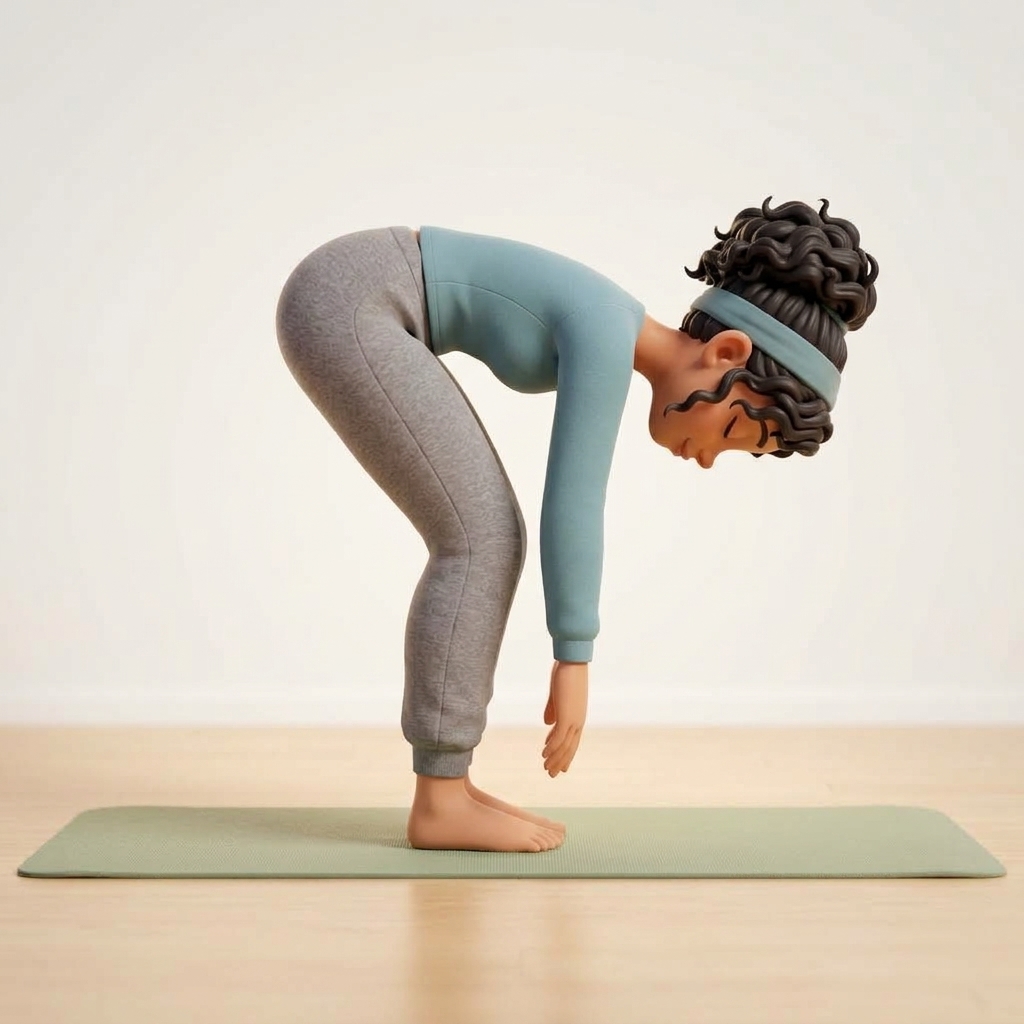
Anatomy Trains Principle: You cannot heal the plantar fascia without lengthening the tight Achilles tendon, gastrocnemius, and hamstrings that pull on it from above.
The Superficial Back Line: How Tight Hamstrings Cause Heel Pain
In pioneering fascia research by Thomas Myers (Anatomy Trains), the human body is connected by myofascial meridians. The **Superficial Back Line (SBL)** is a single continuous sheet of fascia that begins under the soles of your feet (plantar fascia), wraps around your heel (Achilles), climbs your calf, crosses your knee into your hamstrings, and anchors to your sacrum and skull.
When desk workers develop chronically tight hamstrings and calves, that tension acts like a continuous winch, tugging upward on the Achilles tendon and pulling the plantar fascia taut like a bowstring. Releasing the posterior chain relieves the tension on the calcaneus (heel bone).
Before placing weight on your feet in the morning, spend 60 seconds gently pulling your toes backward toward your shin to warm the plantar fascia before standing.
The 5-Step Restorative Routine
1. Downward-Facing Dog with Gentle Heel Pedaling
Primary Function: Lengthens the entire Superficial Back Line from calves to hamstrings
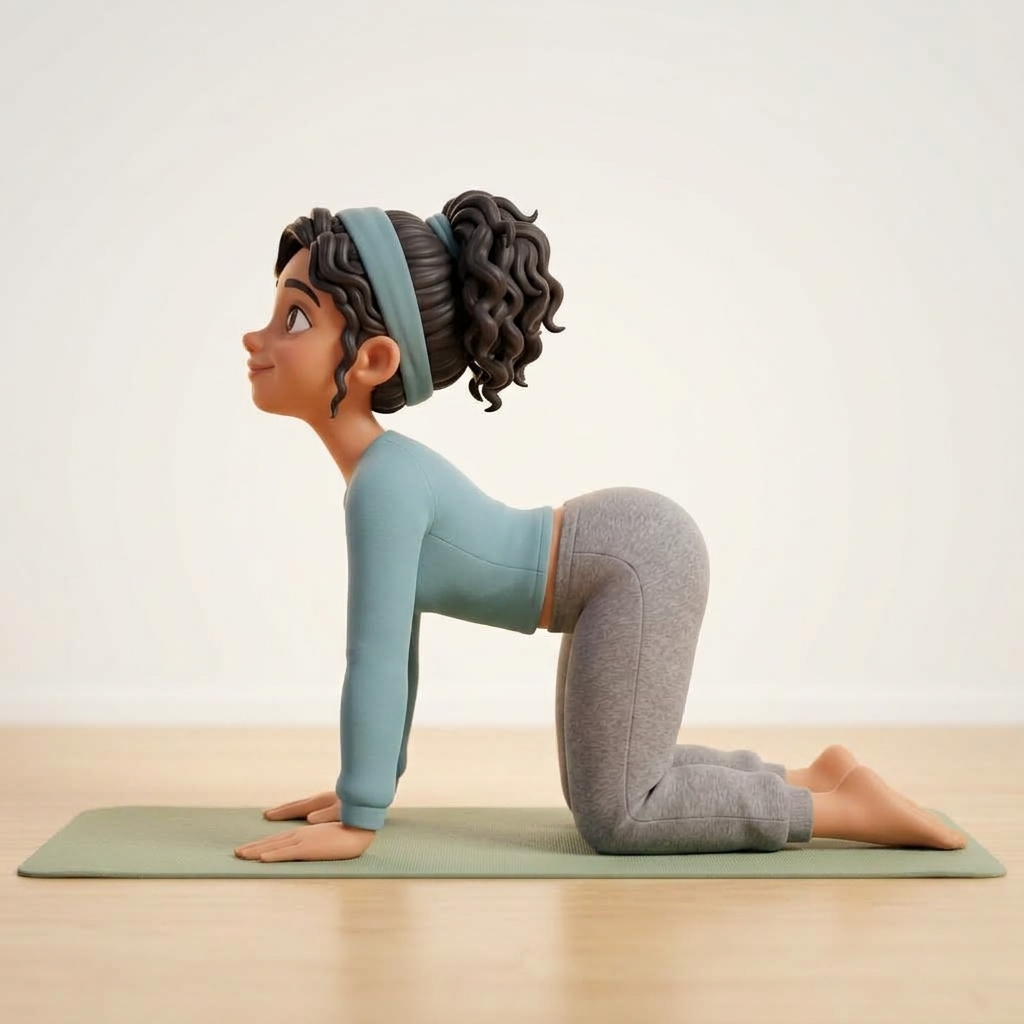
Execution Cue: Press hands firmly into mat and pedal your heels alternately toward the floor.
From hands and knees, tuck your toes and lift your hips toward the ceiling into Downward Dog. Keep knees softly bent. Slowly pedal your heels down one at a time, holding each heel press for 3 slow seconds to stretch the calf and plantar fascia.
2. Restorative Toe Squat (Vajrasana Toe Tuck)
Primary Function: Passively stretches the plantar fascia and flexor hallucis longus
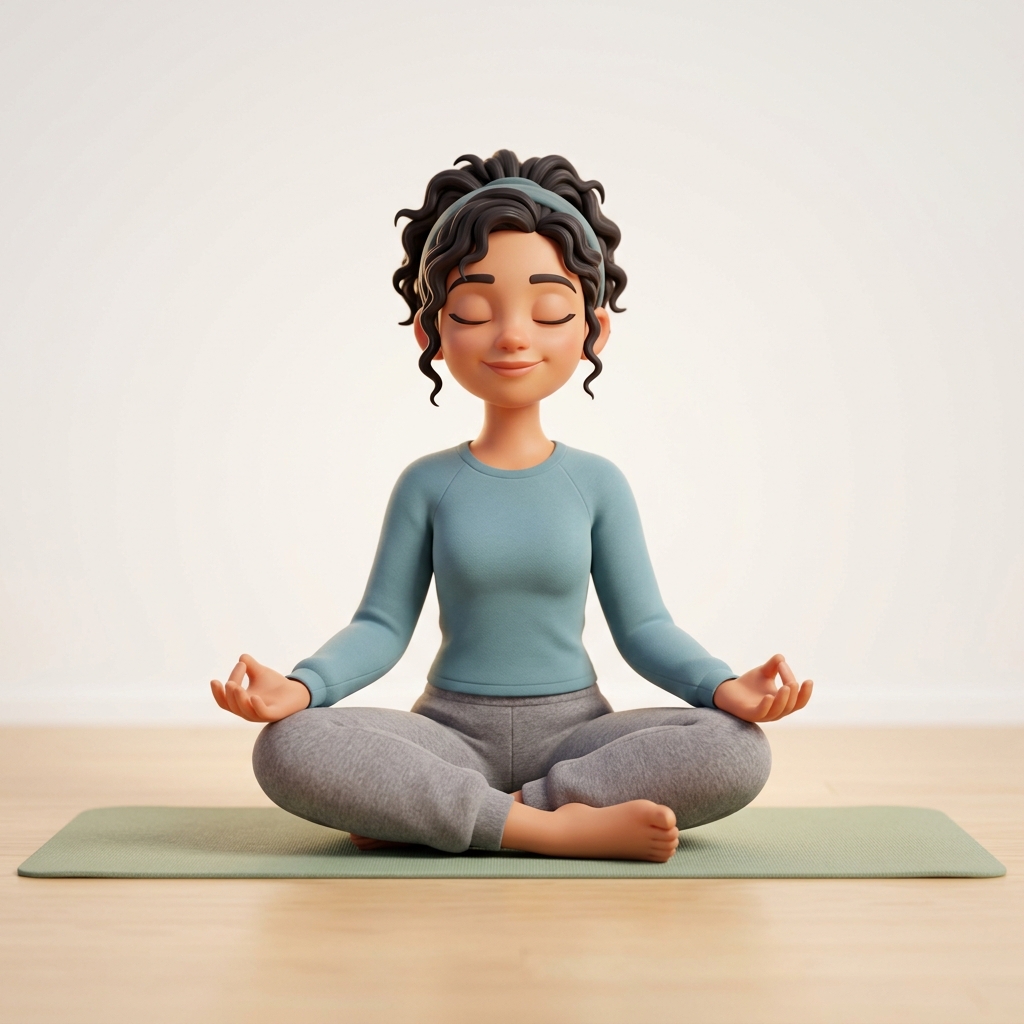
Execution Cue: Kneel with toes tucked under. Sit hips back onto heels gently. Use blocks if intense.
Kneel on your mat. Tuck all 10 toes under, making sure the little toes are included. Slowly sit your hips back toward your heels to stretch the arches of your feet. If too intense, place hands on the floor in front of you. Hold for 30 to 60 seconds.
3. Standing Forward Fold with Bent Knees (Ragdoll)
Primary Function: Decompresses hamstrings and calves without straining the lower back
Execution Cue: Keep knees generously bent to isolate the calf-hamstring fascial junction.
Stand with feet hip-width apart. Bend your knees generously and fold your torso forward. Clasp opposite elbows and let your head dangle. Feel the stretch running from your Achilles tendons up through your hamstrings. Hold for 1 minute.
4. Supine Hamstring & Calf Strap Stretch (Supta Padangusthasana)
Primary Function: Safely isolates the gastrocnemius while keeping the spine flat and relaxed

Execution Cue: Loop a yoga strap around the ball of your foot and extend the leg upward.
Lie flat on your back. Loop a yoga strap or towel around the ball of your right foot and extend the leg toward the ceiling. Flex your foot firmly, pulling toes toward your shin. Hold for 10 deep breaths, then switch legs.
5. Legs-Up-The-Wall with Passive Ankle Flexion
Primary Function: Drains lymphatic inflammation from the heels and soothes foot arches

Execution Cue: Rest legs on wall and perform slow ankle circles and toe flexes.
Rest your legs vertically against a wall while lying supine. Slowly flex your feet toward your face, spread your toes wide, then relax. This drains pooled venous fluid from the foot arches. Rest for 5 minutes.
Daily mobility cannot fully overcome 8 hours of sitting at an uncalibrated desk or poor screen height.
→ Optimize Your Station: Use our Interactive Desk Calculator or test your alignment on our 60-Second Posture Test.
Frequently Asked Questions
Why is plantar fasciitis pain sharpest during the first steps out of bed?
While sleeping, the feet rest in plantar flexion (toes pointed down), allowing the micro-tears in the fascia to heal in a shortened position. Your first morning step abruptly stretches this shortened tissue, tearing it open.
Can tight calf muscles cause plantar fasciitis?
Yes! The gastrocnemius and soleus muscles merge directly into the Achilles tendon, which shares continuous fascial fibers with the plantar fascia. Tight calves are the #1 contributor to heel pain.
Should I wear supportive shoes or go barefoot?
During acute inflammation, wear cushioned supportive footwear. Once pain subsides, practice gradual toe mobility and foot strengthening to restore the arch's natural shock absorption.