 Tar Pit Yoga
Yoga for Neck Pain & Tension Headaches: 5 Suboccipital Release Stretches
Over 70% of chronic tension headaches originate not in the brain, but at the base of the skull in the hypertonic suboccipital muscles and upper cervical vertebrae (C1-C3). Here is a 10-minute restorative sequence to release compressed occipital nerves and dissolve headache pressure.
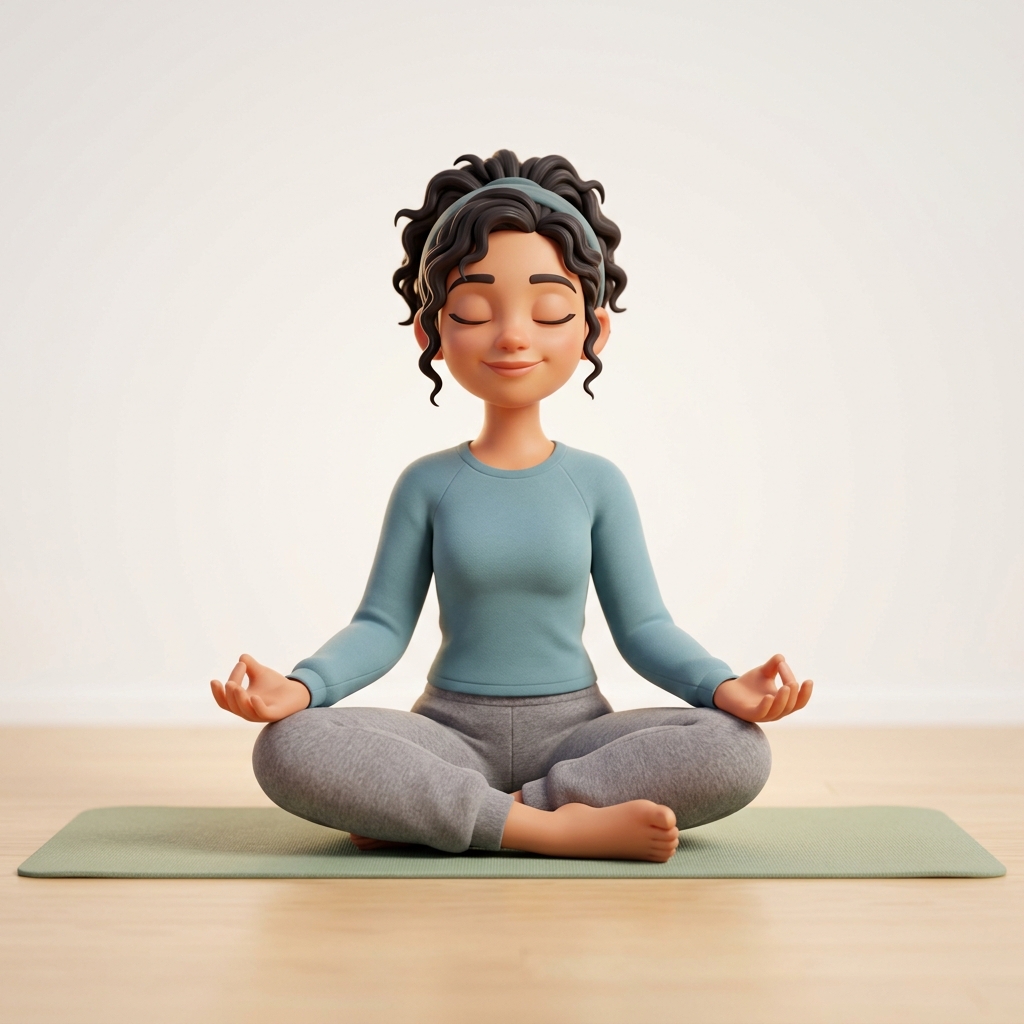
Suboccipital Principle: Releasing the base of the skull relieves pressure on the greater occipital nerve, halting the referral pain radiating behind the eyes.
The Cervicogenic Headache: Why Your Neck Radiates to Your Forehead
Beneath the base of your skull sit four tiny, dense muscle pairs called the suboccipitals (rectus capitis and obliquus capitis). When you stare at a computer monitor or tilt your head forward, these muscles must continuously clench to keep your eyes level with the horizon.
The greater occipital nerve weaves directly through these muscle fibers. When they spasm, the nerve is physically pinched, sending sharp, throbbing, or burning pain up over the top of the scalp and behind the eyes. Somatic chin retractions and restorative traction open this compression canal.
Every inch your computer screen sits below eye level multiplies neck tension. Calculate your exact monitor eye-line using our Interactive Desk Calculator.
The 5-Step Restorative Routine
1. Seated Suboccipital Chin Retraction with Gentle Self-Traction
Primary Function: Separates C1-C2 vertebrae and relieves occipital nerve pinching
Execution Cue: Place two fingers on chin and glide head straight backward without tilting down.
Sit tall with shoulders relaxed. Place fingers on your chin and slide it straight backward like making a subtle double chin. Gently clasp hands behind the base of your skull and apply a 5% upward traction. Hold for 5 deep breaths, repeat 5 times.
2. Lateral Ear-to-Shoulder Neck Stretch with Opposite Arm Reach
Primary Function: Lengthens hypertonic upper trapezius and levator scapulae
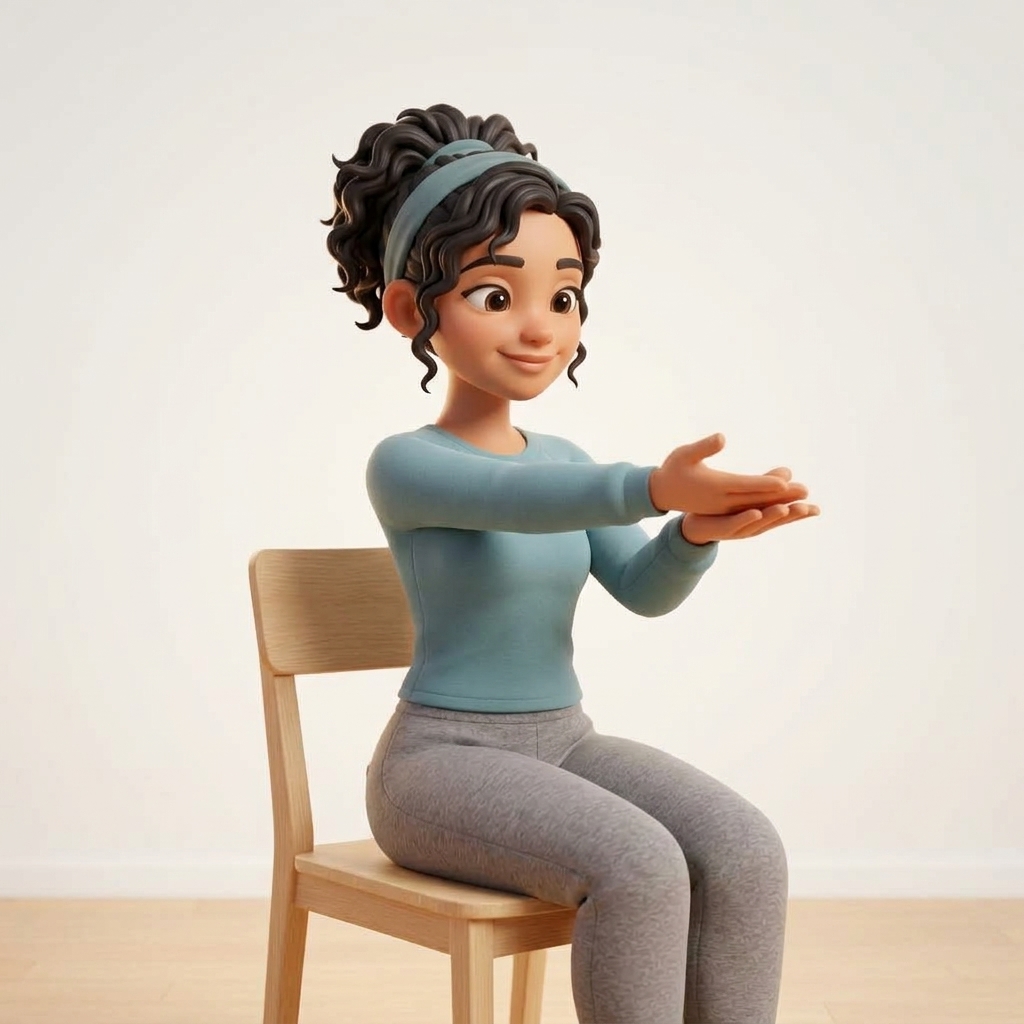
Execution Cue: Drop right ear to right shoulder and reach left fingertips downward toward the floor.
Sit upright. Gently drop your right ear toward your right shoulder without lifting the shoulder. Reach your left fingertips toward the floor to anchor the scapula. Breathe deeply into the left side of your neck for 30 seconds, then switch sides.
3. Supported Child's Pose with Forehead Elevation
Primary Function: Allows the posterior cervical spine to completely disengage under gravity
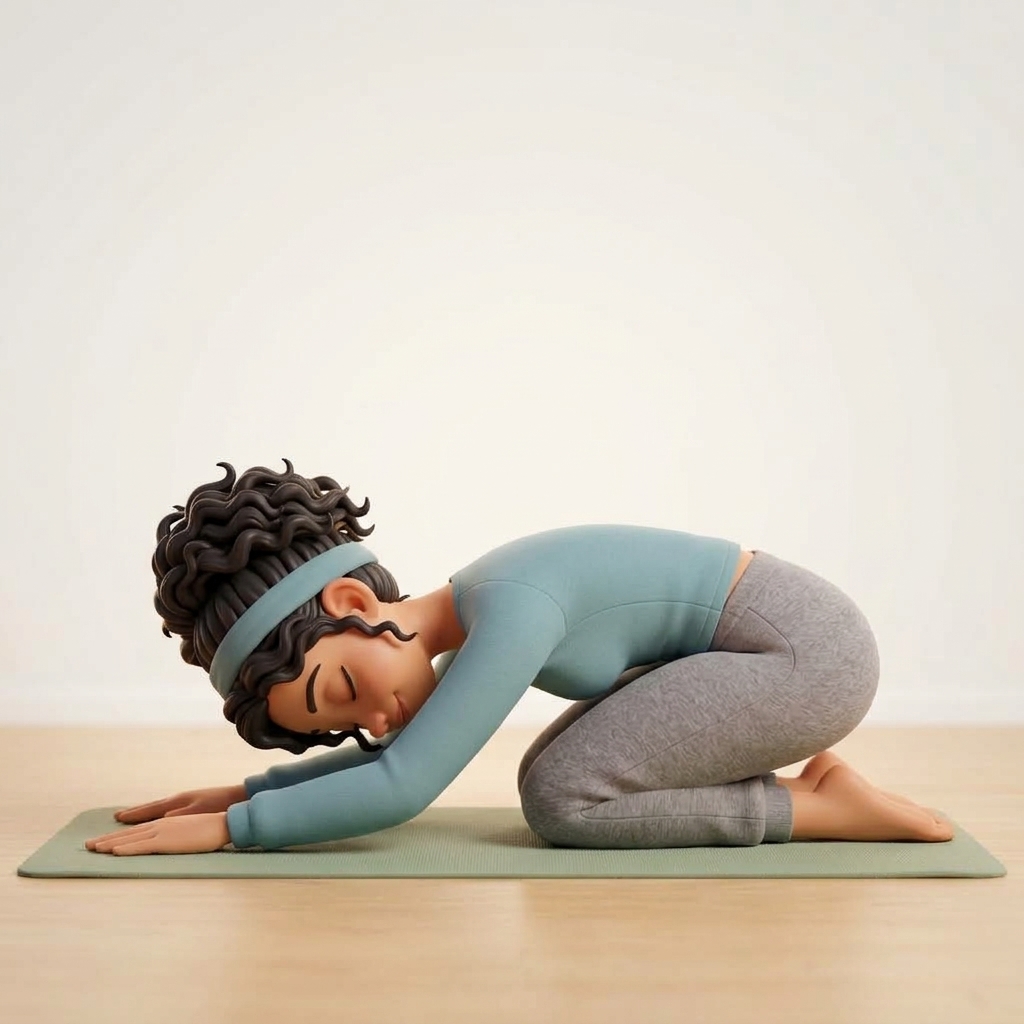
Execution Cue: Rest forehead on a yoga block or pillow to let neck muscles completely go soft.
Kneel with knees wide and sink hips back onto heels. Fold forward and place your forehead on a folded blanket or block. Let your arms rest limp. Take 10 slow diaphragmatic breaths, feeling the back of your neck widen.
4. Prone Scapular Retraction & Lower Trap Activation
Primary Function: Wakes up lower traps to pull tension out of the upper neck
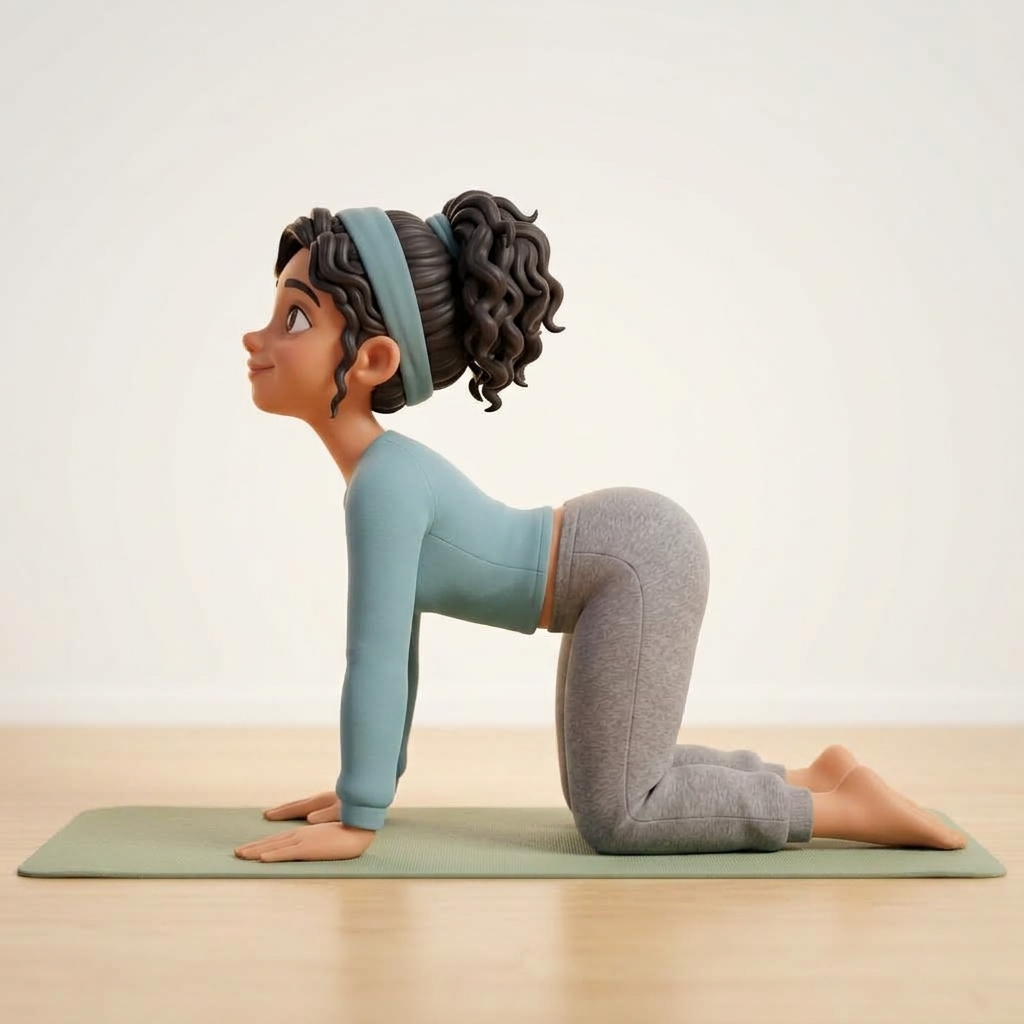
Execution Cue: Lie on belly with arms in a W-shape. Gently lift chest without straining the neck.
Lie face down. Bring your arms into a goalpost or W-shape. Gently hover your hands and chest off the floor by squeezing your lower shoulder blades together. Keep your gaze straight down at the mat. Hold for 5 seconds, repeat 6 times.
5. Savasana with Rolled Cervical Towel Support
Primary Function: Restores the natural lordotic curve of the neck while resting

Execution Cue: Place a rolled hand towel under the hollow of your neck with head resting on floor.
Lie flat on your back. Roll a small hand towel into a 2-inch roll and place it directly beneath the curve of your neck, allowing the back of your head to touch the floor. Close your eyes and breathe slowly for 5 minutes.
Daily mobility cannot fully overcome 8 hours of sitting at an uncalibrated desk or poor screen height.
→ Optimize Your Station: Use our Interactive Desk Calculator or test your alignment on our 60-Second Posture Test.
Frequently Asked Questions
How can I tell if my headache is coming from my neck?
Cervicogenic headaches typically start at the base of the skull on one side, worsen with prolonged neck flexion or desk sitting, and radiate over the ear toward the forehead and eye socket.
Should I crack my neck to relieve tension headaches?
No. Self-cracking the neck stretches already loose ligaments and creates joint hypermobility, leading to rebound muscular spasms within hours. Stick to gentle traction and chin tucks.
How does emotional stress cause neck stiffness?
The trapezius and levator scapulae are primary physical responders to emotional fight-or-flight stress. As documented in Dr. Sarno's TMS research, stress causes autonomic vasoconstriction in the neck.