 Tar Pit Yoga
Yoga for Herniated Disc: Safe Restorative Poses & What to Avoid
A bulging or herniated disc (most commonly at L4-L5 or L5-S1) requires an exact biomechanical movement strategy. Traditional forward bending can worsen disc protrusion, but gentle extension-based restorative yoga promotes disc centralization and nerve decompression.
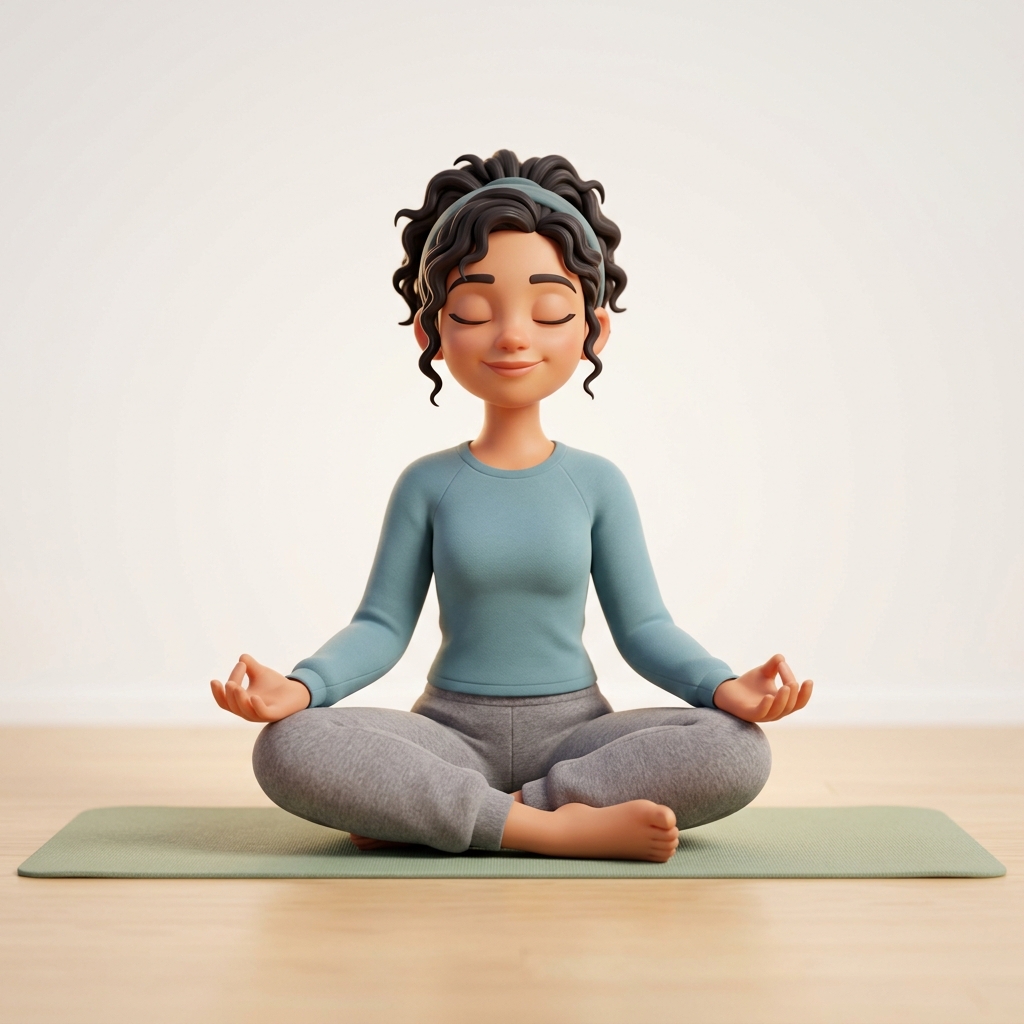
Disc Safety Principle: When the disc bulges posteriorly, gentle extension encourages the nucleus pulposus to migrate back toward the center of the disc.
Biomechanics of a Disc Herniation: The McKenzie Centralization Mechanism
Your intervertebral discs function like jelly donuts with a tough fibrous outer ring (annulus fibrosus) and a gel-like center (nucleus pulposus). Over 90% of disc herniations occur in the posterior or posterolateral direction, caused by chronic slouching and repetitive seated flexion.
When you perform seated toe touches or rounded forward bends, the anterior vertebrae squeeze together, forcing the disc jelly backward against the spinal nerve root. In Tar Pit Yoga, we utilize supported passive extension to reverse this hydraulic pressure, centralizing radiating leg pain back into the spine where it heals.
If pain retreats from your calf or foot back up into your lower back, your disc is healing (Centralization). If pain shoots further down your leg, STOP immediately (Peripheralization).
The 5-Step Restorative Routine
1. Prone Rest with Gentle Sphinx Extension
Primary Function: Hydraulically guides bulging disc material back anteriorly
Execution Cue: Rest on forearms with elbows beneath shoulders. Keep glutes and lower back completely relaxed.
Lie on your stomach. Slowly prop your chest up on your forearms. Keep your abdominal muscles and buttocks completely relaxed so your lumbar spine passively drapes into gentle lordosis. Hold for 2 to 3 minutes.
2. Supported Bridge Pose on a Foam Block
Primary Function: Decompresses the posterior disc space without active muscle strain

Execution Cue: Place a yoga block or pillow under the sacrum to support pelvis elevation.
Lie on your back, bend knees, and slide a supportive block beneath your sacrum. Allow the weight of your pelvis to settle on the block. Hold for 2 minutes while taking diaphragmatic breaths.
3. Reclining Single Knee-to-Chest (Avoid Double Knees)
Primary Function: Releases piriformis guarding without flexing both lumbar segments

Execution Cue: Keep one leg long on the mat while gently drawing the other knee toward the ribs.
Lie supine. Hug one knee toward your chest while keeping the opposite leg extended flat. This releases the gluteal muscles without forcing the lower back into extreme flexion. Hold 30 seconds per side.
4. Legs-Up-The-Wall Passive Disc Decompression
Primary Function: Reduces intradiscal pressure to near zero while draining nerve inflammation

Execution Cue: Support hips with a thin folded blanket. Keep a micro-bend in the knees.
Rest your legs vertically against a wall with back flat on the floor. This posture eliminates gravitational axial load on L4-S1 while calming inflamed sciatic nerve pathways. Rest for 5 minutes.
5. Neutral Tabletop Cat-Cow Waves (Avoid Deep Flexion)
Primary Function: Gently mobilizes the spine without exceeding neutral limits
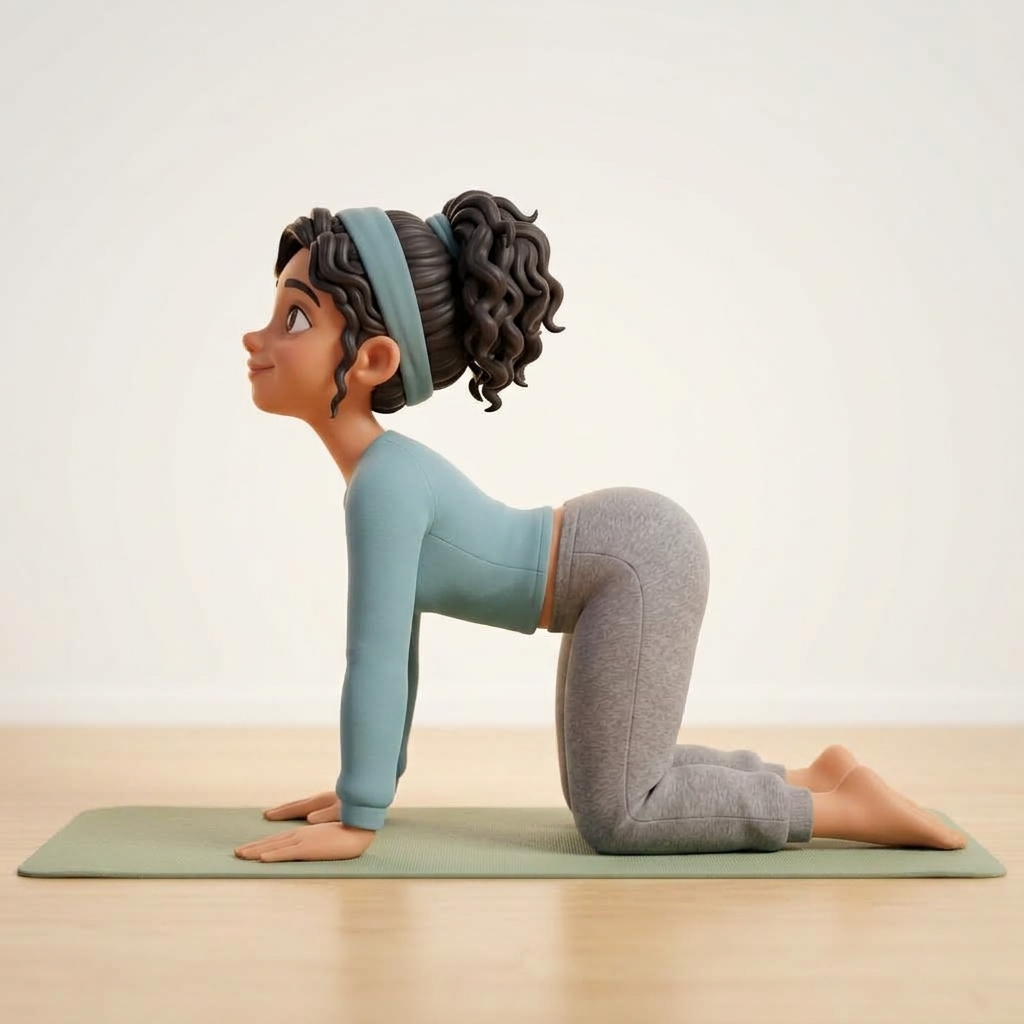
Execution Cue: Keep movement within a gentle 50% range of motion. Emphasize flat-back control.
From hands and knees, move gently between flat back and subtle extension. Avoid deep, exaggerated rounding of the lower back. Repeat 8 smooth cycles.
Daily mobility cannot fully overcome 8 hours of sitting at an uncalibrated desk or poor screen height.
→ Optimize Your Station: Use our Interactive Desk Calculator or test your alignment on our 60-Second Posture Test.
Frequently Asked Questions
What yoga poses must I avoid with a herniated disc?
Avoid standing forward bends with straight legs, seated forward folds (Paschimottanasana), deep spinal twists, and aggressive plow pose. These flexed positions squeeze disc material backward into nerve roots.
Can a herniated disc heal on its own without surgery?
Yes. Clinical studies show that 65% to 80% of herniated discs resorb naturally within 6 to 12 months as the body's immune macrophages break down extruded disc tissue.
How does sitting affect a herniated disc?
Sitting unsupported increases pressure on lumbar discs by over 140% compared to standing. Use our Desk Calculator to ensure proper lumbar support.