 Tar Pit Yoga
Yin Yoga for Chronic Pain: 5 Long-Hold Restorative Fascial Poses
When pain has persisted for months or years, the problem is no longer acute tissue injury; it is chronic central sensitization and dehydrated, locked connective tissue (fascia). Here is how Yin Yoga’s 3-to-5-minute passive holds remodel collagen fibers, stimulate fibroblasts, and signal profound safety to the brain.
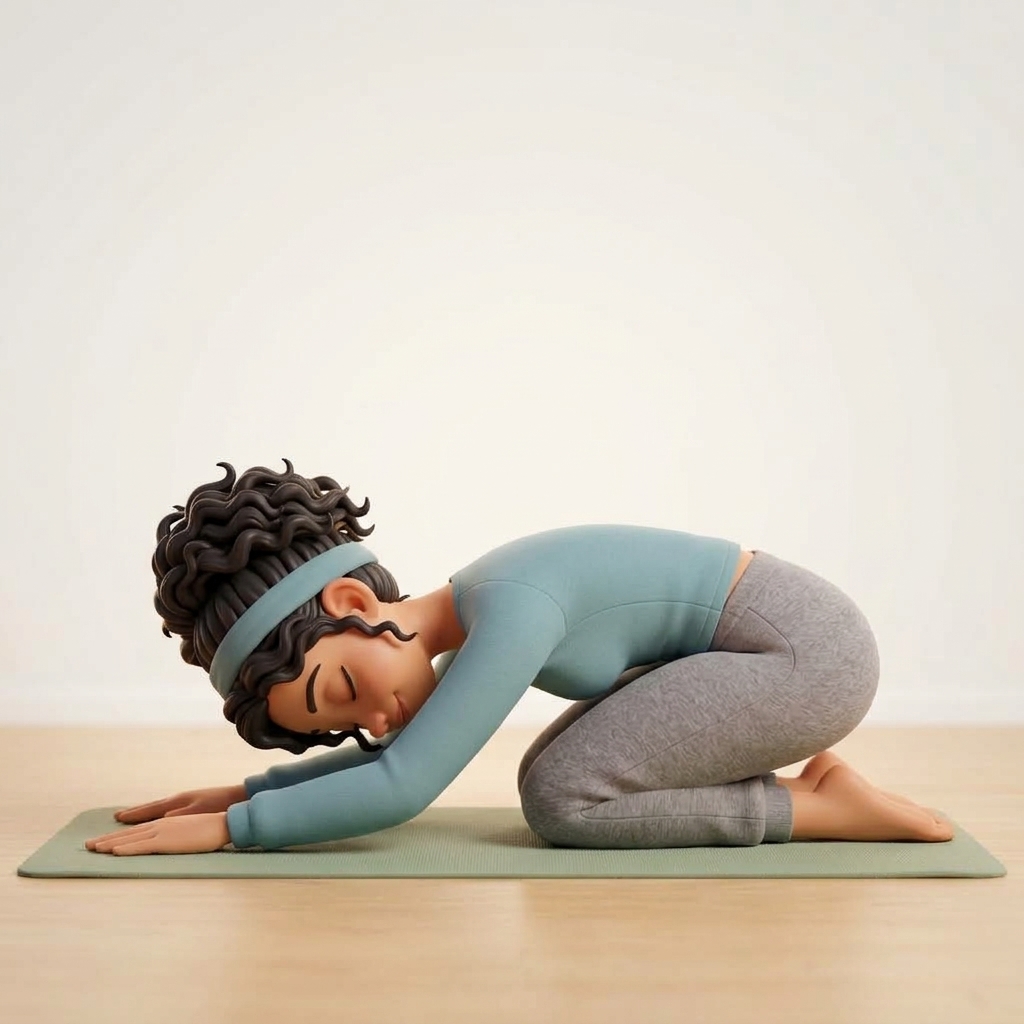
Yin Principle: Muscles require heat and movement to stretch; dense collagenous fascia requires time, stillness, and passive gravitational traction to remodel.
The Fascial Science: Plastic Deformation & Fibroblast Remodeling
Unlike dynamic 'Yang' yoga that targets elastic muscular tissue, Yin yoga applies gentle, sustained traction to dense connective tissues—ligaments, joint capsules, and deep fascial sheets. Under 3 to 5 minutes of passive loading, fascia undergoes *plastic deformation*, releasing adhesions and stimulating fibroblasts to produce fresh hyaluronic acid.
Equally important, Yin yoga acts as a powerful neuroplastic desensitization tool. In Dr. John Sarno's TMS framework, chronic pain persists because the brain is locked in a hyper-vigilant danger alarm. Remaining still in gentle, supported discomfort while practicing slow diaphragmatic breathing retrains the nervous system that your body is safe.
1. Find an appropriate edge (never pain, just mild sensation).
2. Resolve to remain completely still.
3. Hold the pose for time (3 to 5 minutes) while breathing through our Breath Pacer.
The 5-Step Restorative Routine
1. Supported Butterfly Pose (Baddha Konasana)
Primary Function: Gently remodels dense thoracolumbar fascia across the lower back and hips
Execution Cue: Sit with soles of feet together away from pelvis, fold softly over pillows. Hold 3 to 5 minutes.
Sit on your mat and bring soles of feet together, sliding them 1 to 2 feet in front of you into a diamond shape. Place pillows on your feet. Round your spine forward and let your forehead rest on the pillows. Relax all muscular effort and breathe slowly for 4 minutes.
2. Supported Sphinx Pose with Bolster
Primary Function: Gently stimulates the lumbar spine discs and anterior longitudinal ligament

Execution Cue: Lie on belly with chest propped on forearms or a pillow. Relax glutes completely.
Lie prone on your stomach. Prop yourself up on forearms with elbows beneath shoulders. Place a cushion under your ribcage for support. Completely relax your buttocks, legs, and spine. Hold for 3 minutes, feeling gentle compression in the lumbar vertebrae.
3. Supported Reclining Spinal Twist
Primary Function: Hydrates the facet joint capsules and releases the lateral fascial meridian
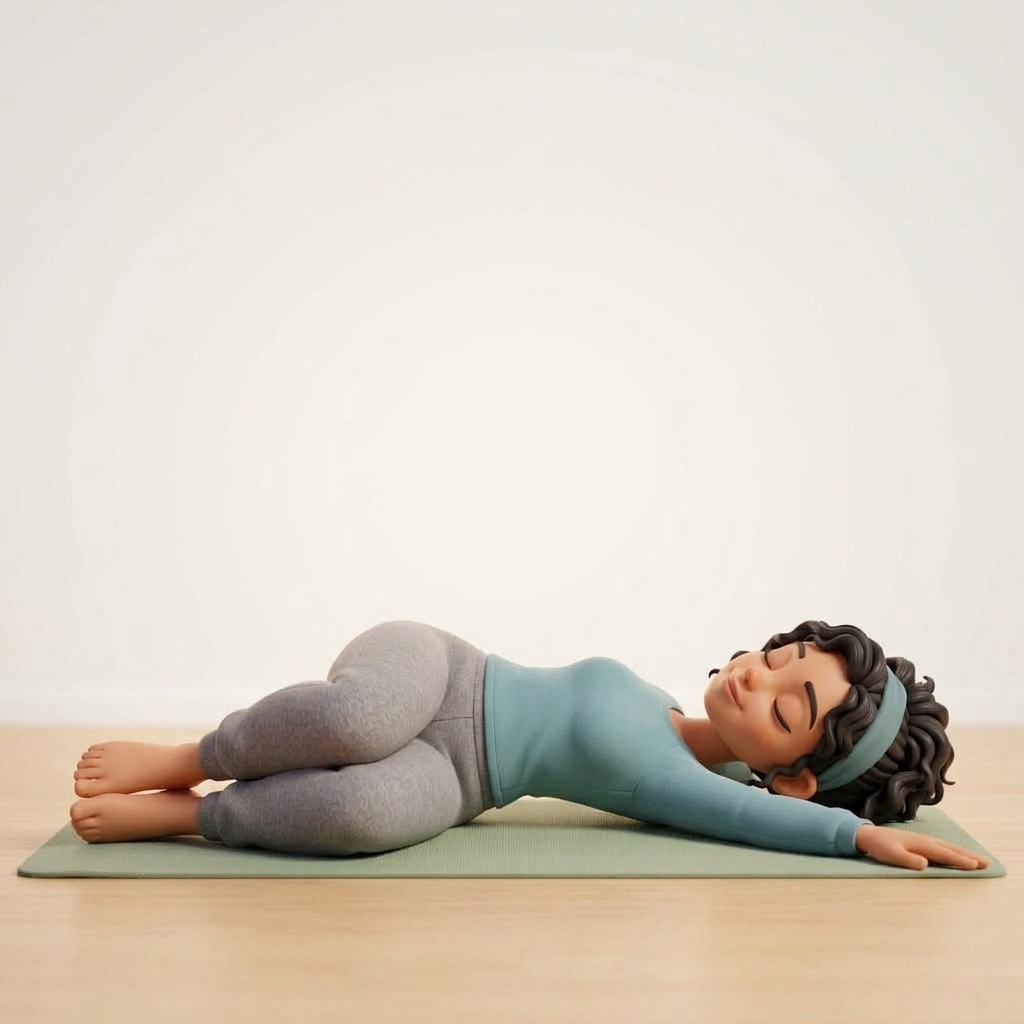
Execution Cue: Rest knees on a thick bed pillow with arms out in a soft T-shape. Hold 3 minutes per side.
Lie supine, bend knees, and let them drop to the left onto a supportive bolster. Keep both shoulder blades resting flat on the mat. Close your eyes and surrender all muscle control. Hold for 3 minutes per side.
4. Caterpillar Pose (Gentle Supported Forward Fold)
Primary Function: Decompresses the entire Superficial Back Line of connective tissue
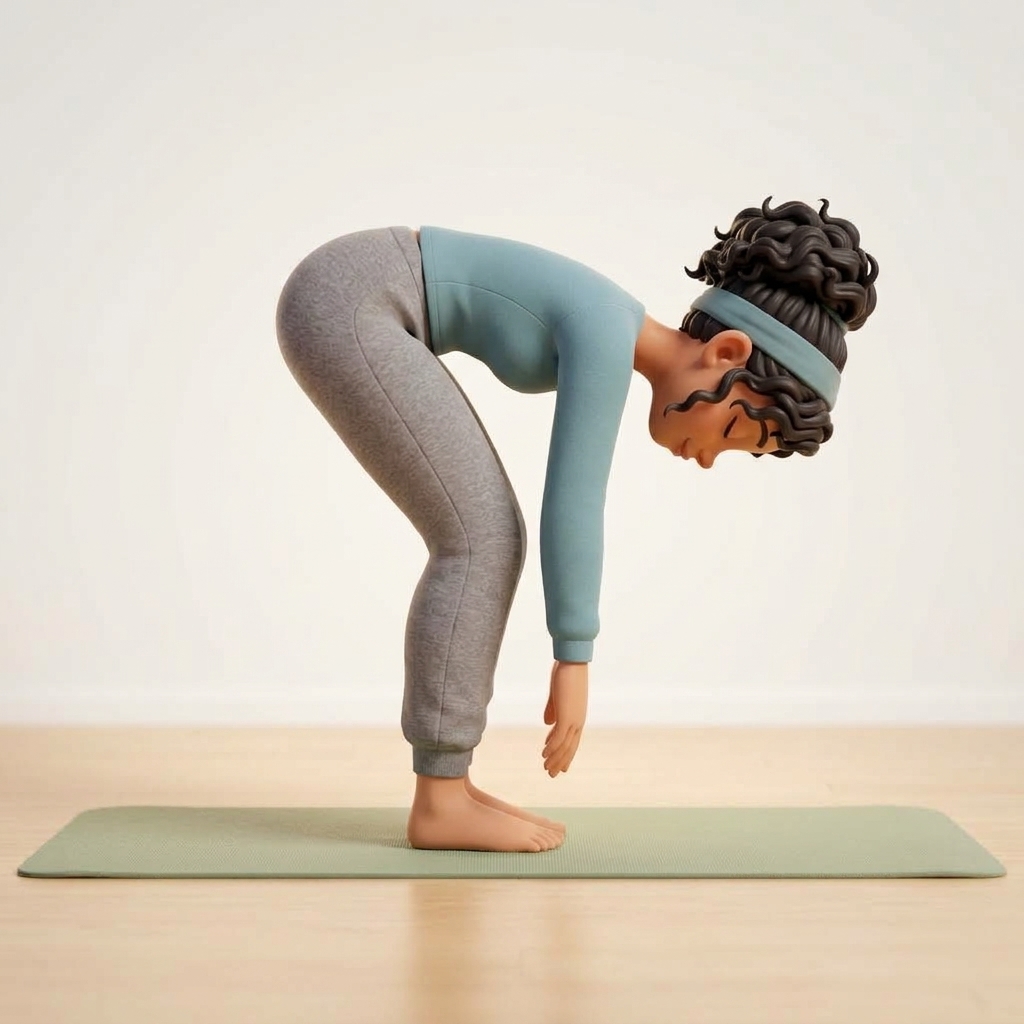
Execution Cue: Sit with legs straight and loose. Round forward over stacked pillows with zero pulling.
Sit on your mat with legs extended loosely in front of you. Place a stack of pillows across your thighs. Fold forward softly from your hips, letting your spine round naturally like a caterpillar. Rest your forehead on the pillows for 4 restful minutes.
5. Supported Savasana with Knee Elevation
Primary Function: Integrates fascial rebound and resets central nervous system sensitization

Execution Cue: Lie flat on back with a firm pillow under knees and a blanket covering you.
Lie flat on your back with a thick pillow beneath your knees to keep your lumbar spine completely neutral. Place a hand on your heart and one on your belly. Rest in total, conscious stillness for 5 to 7 minutes.
Daily mobility cannot fully overcome 8 hours of sitting at an uncalibrated desk or poor screen height.
→ Optimize Your Station: Use our Interactive Desk Calculator or test your alignment on our 60-Second Posture Test.
Frequently Asked Questions
How is Yin yoga different from restorative yoga?
Restorative yoga uses props to support the body in 100% comfort with zero stretch sensation. Yin yoga intentionally introduces a gentle, non-painful tension (about 30-40% of max sensation) into connective tissues to stimulate fascial remodeling.
Can Yin yoga help with fibromyalgia and chronic fatigue?
Yes. Clinical trials show that Yin yoga down-regulates sympathetic nervous system over-arousal, lowers systemic cortisol, and calms central sensitization in fibromyalgia patients.
How often should I practice Yin yoga?
2 to 3 sessions per week of 20 to 30 minutes provides optimal fascial hydration and nervous system regulation without overtaxing recovering connective tissues.