 Tar Pit Yoga
Chair Yoga for Desk Workers: 5 Seated Stretches for Workday Relief
You don't need a yoga mat or athletic wear to escape the physical toll of 8 hours of computer work. Here is a 5-minute seated chair yoga routine designed to reverse keyboard slouching, open tight hips, and reset your nervous system right at your office desk.

Desk Ergonomics Rule: A 2-minute seated movement micro-break every 30 minutes prevents the muscular ischemic guarding that leads to chronic back spasms.
The Cornell '20-8-2' Movement Rhythm at Work
Human physiology is not designed for static postures—whether sitting or standing. According to Cornell University ergonomics research (Dr. Alan Hedge), remaining seated for more than 45 uninterrupted minutes collapses micro-vascular circulation in the paraspinal muscles.
By performing seated articular movements every 30 minutes, you pump venous blood back to the heart, restore synovial lubrication to your spine, and break the unconscious mental tension patterns that fuel Dr. Sarno's TMS pain syndrome.
If your chair seat pan is too high or low, your knees cannot form the optimal 90-degree angle. Check your exact chair and desk height using our Interactive Desk Calculator.
The 5-Step Restorative Routine
1. Seated Chair Cat-Cow Spinal Wave
Primary Function: Mobilizes the entire spine without leaving your desk chair
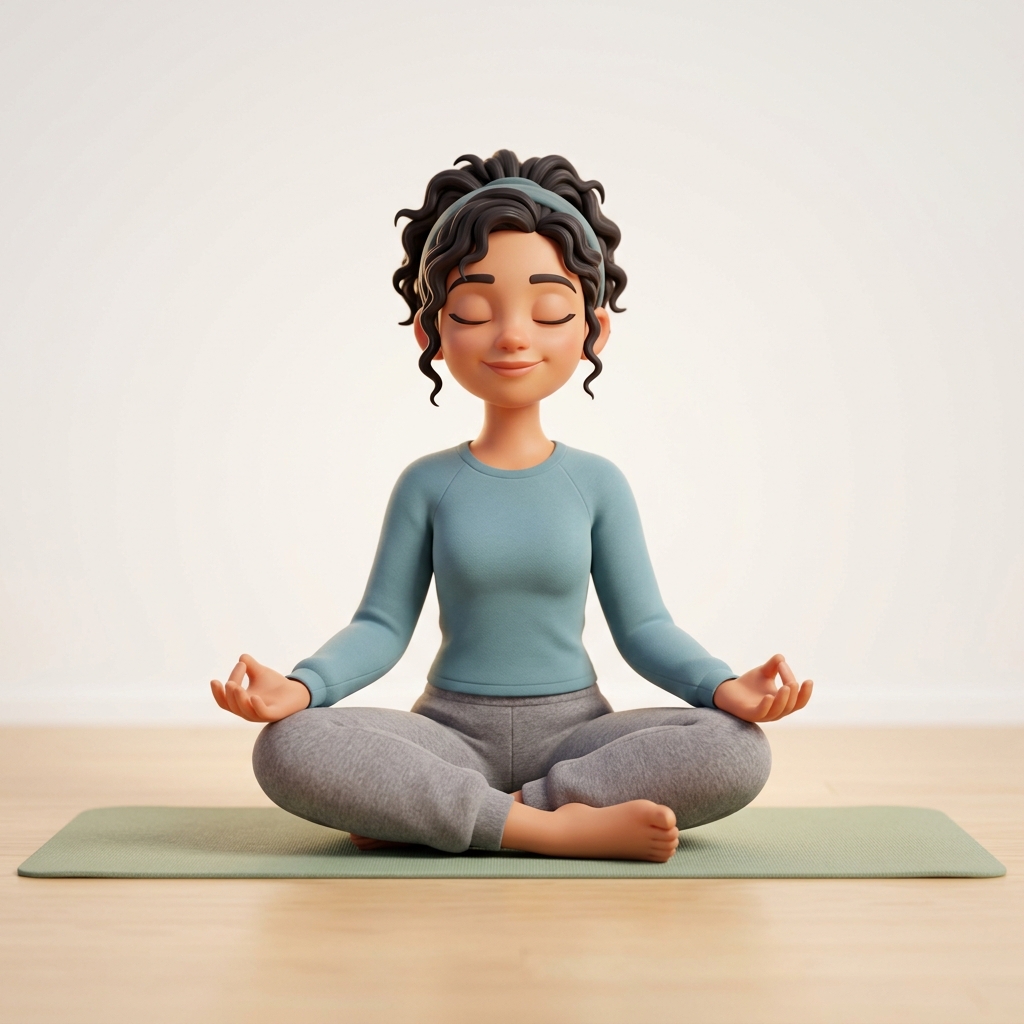
Execution Cue: Place hands on knees. Inhale to arch chest forward; exhale to round spine and tuck chin.
Sit on the front edge of your office chair with feet flat on the floor. On an inhale, draw shoulder blades together and open your chest forward (Cow). On an exhale, round your back and tuck your chin toward your chest (Cat). Repeat 8 slow cycles.
2. Seated Chair Figure-4 Piriformis Stretch
Primary Function: Releases deep gluteal tightness and prevents desk sciatica

Execution Cue: Cross right ankle over left knee. Keep right foot flexed to protect knee ligaments.
Sit upright. Cross your right ankle over your left thigh just above the knee. Keeping your spine straight, hinge forward from the hips until you feel a deep, pleasant stretch in your right glute. Hold for 30 seconds per side.
3. Seated Chair Torso Twist
Primary Function: Releases lumbosacral rotation and opens tight chest muscles
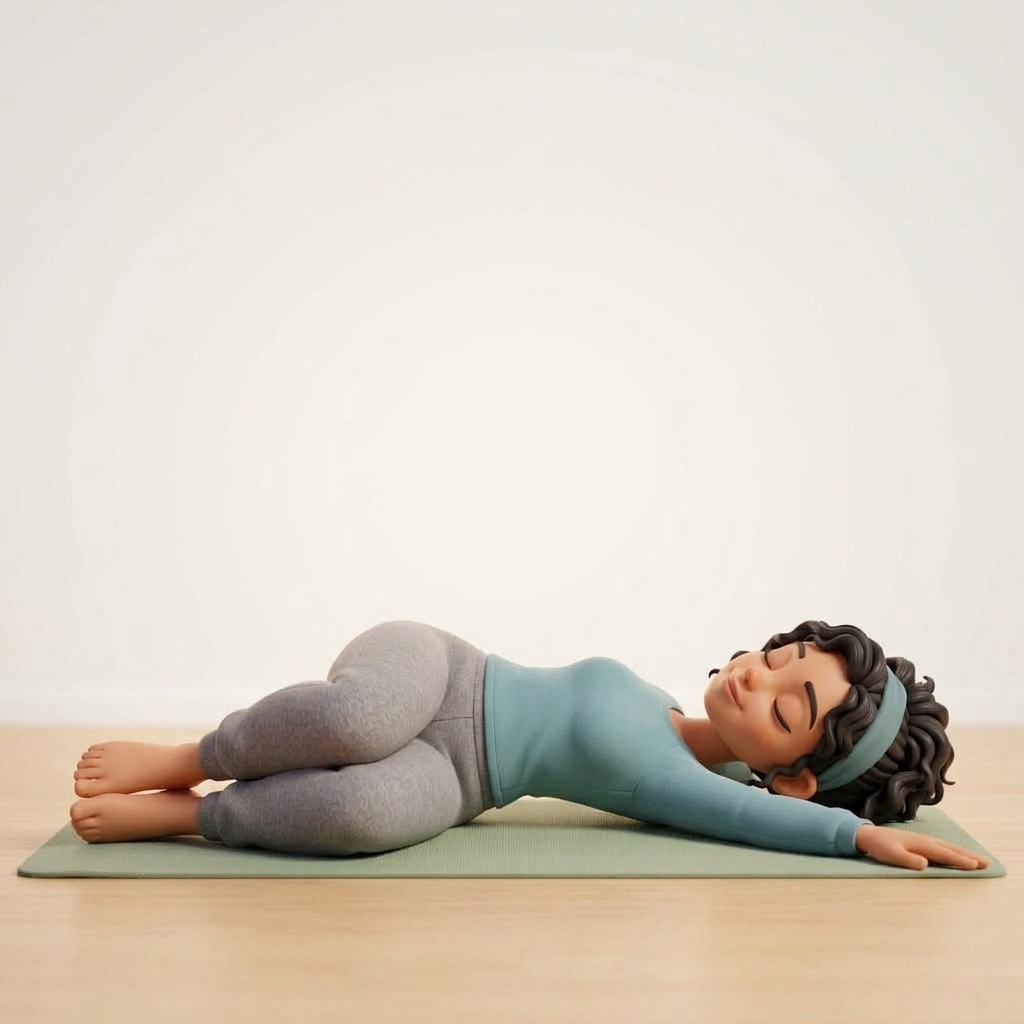
Execution Cue: Place left hand on outside of right knee and right hand on the back of chair.
Sit tall with feet planted firmly on the floor. Inhale to lengthen your crown toward the ceiling. On exhale, gently twist your torso to the right, looking over your right shoulder. Hold for 5 deep breaths, then switch sides.
4. Desk Median Nerve Glide & Wrist Reset
Primary Function: Prevents carpal tunnel syndrome and mouse-hand numbness
Execution Cue: Extend arm with flexed wrist and tilt head away to gently floss the median nerve.
Extend your right arm to the side at shoulder level, palm facing up. Flex your wrist so fingers point downward. Simultaneously tilt your head to your left shoulder to slide the median nerve smoothly through your carpal canal. Repeat 8 times per arm.
5. Seated Overhead Interlace & Side Stretch
Primary Function: Decompresses squished intervertebral discs and expands the ribcage
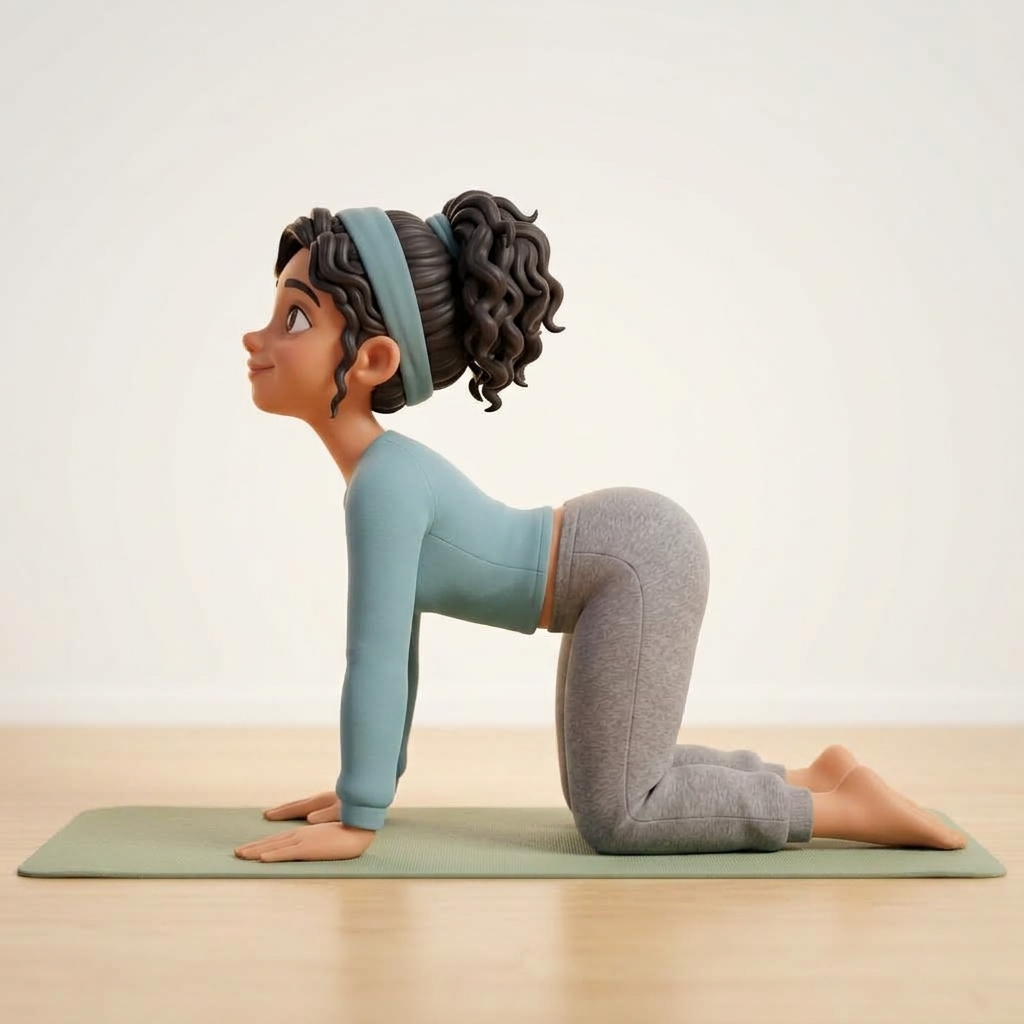
Execution Cue: Interlace fingers, flip palms to the ceiling, and press hands overhead.
Interlace your fingers, press palms upward toward the ceiling, and stretch your spine tall. Take a deep inhale, then exhale and gently lean 2 inches to the right. Inhale to center, exhale to the left. Repeat 3 times per side.
Daily mobility cannot fully overcome 8 hours of sitting at an uncalibrated desk or poor screen height.
→ Optimize Your Station: Use our Interactive Desk Calculator or test your alignment on our 60-Second Posture Test.
Frequently Asked Questions
How often should I do chair yoga during the workday?
Practice a 2-to-3 minute seated sequence every 60 to 90 minutes. This micro-break resets neuromuscular holding patterns before fatigue turns into spasms.
Can chair yoga help with carpal tunnel and wrist pain?
Yes! Incorporating seated median nerve glides and wrist flexor stretches prevents the fluid accumulation that causes carpal tunnel syndrome.
Is chair yoga effective if I have severe back pain?
Chair yoga is often more effective than traditional yoga for acute back pain because the chair provides stable pelvic support, eliminating balance fatigue.
← Check Your Posture with Our 60-Second Test Back to Homepage →